
The 2026 wholesale market is placing renewed attention on Tiffany Stained Glass Table Lamps. Buyers want decorative lighting with craftsmanship, dependable supply, and measurable commercial value. Grand View Research’s lighting market reports identify residential renovation, decorative fixtures, and energy-efficient illumination as important growth drivers. These trends matter to wholesalers serving furniture stores, hospitality projects, and online retailers.
This guide evaluates leading Tiffany Stained Glass Table Lamps through a practical wholesale lens. It considers shade construction, copper-foil workmanship, glass color consistency, LED compatibility, packaging strength, and supplier documentation. Reports from the U.S. Department of Energy continue to emphasize LED efficiency and longer service life. Therefore, compatible sockets and safe heat management deserve more attention than decorative appearance alone.
Small details matter.
A well-made lamp should show clean solder lines, stable seams, and an even base. Wholesale buyers should also request product samples, carton-drop testing, warranty terms, and realistic production schedules. Intertek, UL Solutions, and other recognized testing organizations provide useful guidance for electrical safety verification, although requirements vary by destination market. Compliance must be confirmed for each shipment.
Market rankings are never perfect. Sales data may overlook regional preferences, custom orders, and changing freight costs. A lamp that performs well in North America may move slowly in another market. This introduction therefore treats “top” as a balanced judgment, not a permanent label. The following discussion connects industry research with supplier experience, product inspection, and commercial practicality for 2026 purchasing decisions.
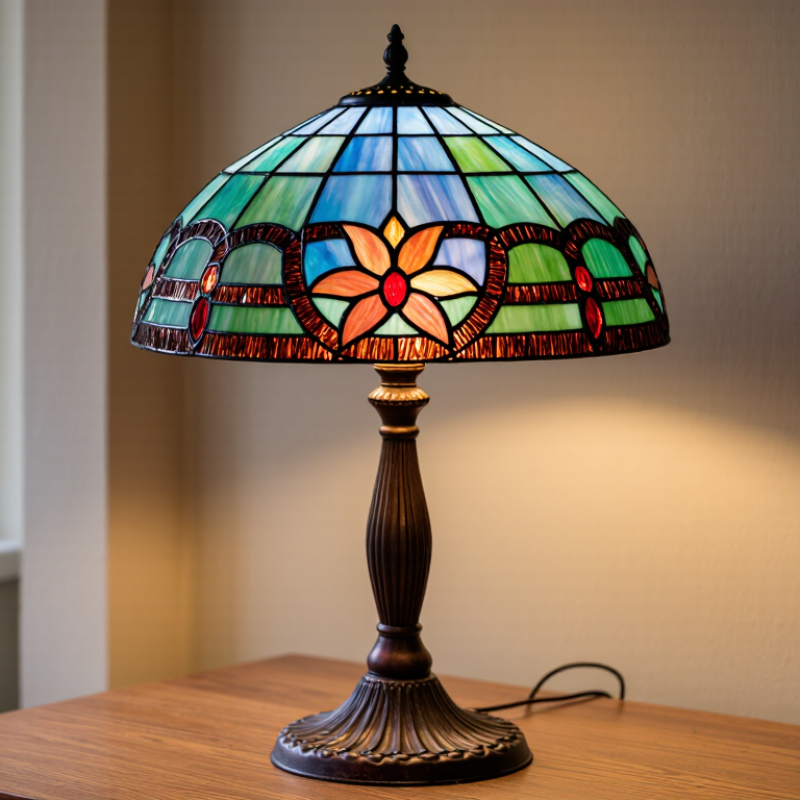
Tiffany stained glass table lamps use small colored glass pieces joined with copper foil or lead came. Their warm light creates a mosaic effect across desks, consoles, and bedside tables.
The style developed in the late nineteenth century, when artisans explored richer glass colors, organic motifs, and handcrafted metalwork. Popular patterns include dragonflies, peacock feathers, flowers, vines, and geometric borders.
A reliable lamp should show even solder lines, stable joints, balanced proportions, and a secure base. The glass should display controlled variation, not random defects. Some irregularity is expected. Too much inconsistency, however, may suggest weak quality control.
Buyers should also check shade weight, socket durability, cord safety, and compatibility with energy-efficient bulbs.
Grand View Research valued the global lighting fixtures market at about 124.7 billion dollars in 2023, with projected growth through 2030. The U.S. Department of Energy also reports ongoing efficiency improvements in LED lighting, making LED-compatible stained glass lamps more practical for wholesale buyers.
For 2026 sourcing, ask suppliers for material specifications, production photographs, packaging tests, and sample approval procedures.
Wholesale pricing should reflect hand assembly, glass complexity, metal finish, and defect allowances. Low prices can look attractive. They may hide fragile soldering or uneven color matching.
In 2026, wholesale Tiffany-style table lamps require more than attractive colored glass. Buyers should verify glass thickness, solder joints, shade balance, and base stability through physical samples. The U.S. Department of Energy reports that modern LED products can achieve over 100 lumens per watt. Therefore, buyers should request measured lumens, color temperature, and wattage, rather than trusting decorative claims. A warm 2700K to 3000K output usually suits bedrooms and hospitality interiors.
Compliance is a purchasing factor, not paperwork. Ask suppliers for current electrical safety test reports, traceable component details, and market-specific plug specifications. The International Energy Agency reported that LED lighting represented about half of global lighting sales in 2022, showing why efficient drivers matter in large projects. For wholesale orders, also examine minimum order quantities, replacement-glass availability, carton drop-test results, and lead times. A beautiful shade is still a costly problem if one panel arrives cracked.
Cost analysis should include landed price, duties, packaging, inspection, and expected defect rates. Industry market research from Grand View Research projects steady growth for decorative lighting through 2030, but growth does not guarantee consistent quality. I have seen samples where the colors looked rich under showroom lights but appeared dull near a window. That mistake is easy to repeat. Compare samples under daylight and warm LEDs, document color variation, and keep a tolerance standard before approving production. Availability may matter more than a slightly lower unit price.
This planning benchmark ranks the practical factors wholesale buyers commonly review when comparing stained-glass table lamp suppliers in 2026. Product compliance, glass quality, packaging protection, and delivery reliability receive the strongest weighting because they directly affect resale risk and customer satisfaction.
Classic stained-glass table lamps remain popular for hospitality spaces, reading corners, and boutique interiors. Favored styles include floral patterns, geometric panels, nature scenes, and warm amber mosaics. Each style creates a different mood. Geometric designs suit modern rooms, while floral shades add softer visual movement. Buyers should request accurate shade dimensions, base height, and packed weight before placing wholesale orders.
Material quality directly affects appearance and service life. Look for evenly colored glass, secure copper foil or leaded joints, stable metal bases, and heat-resistant wiring. Genuine artisan work may show slight color variation. That is not always a defect. However, loose solder, sharp edges, cloudy glass, or uneven shade alignment require correction. Craftsmanship standards should include electrical testing, shade-load checks, protective packaging, and sample approval. In my experience, one approved sample is more useful than polished catalog photos. Still, a sample cannot reveal every shipping risk.
Tips: Ask for close-up joint photos. Test the switch and cord. Confirm replacement-part availability. Request a drop-test report when possible. Inspect ten percent of each shipment upon arrival. Keep written records of defects and corrections. A small flaw can become costly when repeated across hundreds of lamps. Some buyers focus too heavily on low pricing, and that decision can weaken consistency. Wholesale value depends on reliable materials, careful finishing, and predictable quality.
2026 Top Tiffany Stained Glass Table Lamps Wholesale?
Wholesale pricing starts with construction, not decoration. For 12–49 units, stained glass table lamps commonly quote around $65–$180 each. Larger shades, brass detailing, and handmade soldering can push prices above $220. These are practical buying benchmarks, not fixed tariffs. Grand View Research valued the global decorative lighting market at approximately $40 billion in 2023, with continued growth expected through 2030. That growth supports demand, but it does not guarantee healthy margins. Ask for a detailed quote covering shade size, base material, wiring, packaging, and delivery terms.
Minimum orders often range from 12 to 48 pieces. Custom colors may require higher quantities. A supplier offering only six units sounds flexible, yet the unit cost may become uncompetitive. Request one paid sample before ordering. Check solder lines closely. Inspect the lamp when switched off and illuminated. Small glass-color differences are normal, but unstable bases and exposed wiring are not. The U.S. Consumer Product Safety Commission recommends evaluating electrical products for recognized safety compliance and clear labeling; request relevant test records for your sales market.
Supplier evaluation should combine documents with physical evidence. Confirm production capacity, defect replacement terms, carton drop-test results, and lead times during peak seasons. Packaging deserves attention: a sharp shade edge can turn a profitable shipment into a costly return. I once trusted attractive photos too much. The first sample looked excellent, but its base felt light and unstable. That mistake still matters. Review the numbers again. A cheaper lamp is not cheaper after breakage, delays, and refunds.
Importing tiffany-style stained glass table lamps in 2026 requires careful sourcing, not only attractive catalog photos. Wholesale buyers should verify material descriptions, electrical ratings, packaging tests, and factory documentation before placing large orders. Ask suppliers for sample units with real glass shade details, stable bases, and secure wiring. A warm, uneven glass pattern can show craftsmanship, but sharp edges or loose solder indicate poor control.
Import costs may shift with freight rates, exchange rates, duties, and regional safety requirements. Confirm product classifications and required certificates with qualified customs or compliance professionals. Quality inspections should include pull tests, switch operation, insulation checks, shade alignment, and carton drop testing. One missed defect can damage a whole shipment. In practice, inspection reports are useful, but they are not perfect. Buyers still need random checks after production.
Tips: Request a pre-production sample. Use clear defect photos. Specify acceptable color variation. Keep spare components available. Track delivery performance by supplier, not promises.
Market demand is moving toward smaller lamps, energy-efficient bulbs, richer amber tones, and designs suited to compact homes. Customers also notice repairability and safer packaging. Some buyers prefer handmade variation, while others expect identical units. That tension needs honest product descriptions. A lower unit price may become expensive after breakage, returns, and slow customs clearance.
Check glass thickness, solder joints, shade balance, and base stability. Test the switch and cord. Samples reveal more. Look for sharp edges, loose joints, or uneven alignment.
Request measured lumens, color temperature, wattage, and electrical ratings. Do not rely only on decorative descriptions. Warm 2700K to 3000K light suits bedrooms and hospitality spaces.
View samples near a window and under warm LED lighting. Record differences between pieces. Rich showroom colors may look dull in daylight. I still find color judgment imperfect.
Ask for current electrical test reports, traceable component details, and market-specific plug information. Confirm requirements with qualified compliance professionals. Paperwork alone is not enough.
Request carton drop-test results and protective packaging details. Check shade support, padding, and packed weight. One cracked panel can affect an entire order.
Include the unit price, freight, duties, packaging, inspection, and expected defect rates. A cheaper lamp may cost more after returns. Small flaws multiply.
Approve a physical pre-production sample and define acceptable color variation. Inspect about ten percent of each shipment. Keep photos and written correction records. Random checks remain necessary.
Geometric shades suit modern rooms, while floral patterns create softer movement. Amber mosaics add warmth. Confirm shade dimensions, base height, and packed weight before ordering.
Ask whether replacement glass, switches, cords, and other components are available. Repairability can reduce returns. It is easy to overlook this detail.
Describe natural color differences honestly, but reject cloudy glass, sharp edges, loose solder, and unstable bases. Handmade variation is not always a defect. Expectations must be clear.
This 2026 guide to Tiffany Stained Glass Table Lamps explains their defining features, including handcrafted colored glass, decorative leaded patterns, warm illumination, and the artistic traditions behind their development. It also highlights how design details such as shade shape, color balance, base materials, glass texture, and overall craftsmanship can influence both appearance and durability. Buyers can use these criteria to select styles that match residential, hospitality, and retail interiors.
For wholesale purchasing, the guide covers supplier evaluation, product consistency, minimum order quantities, pricing structures, packaging, and communication standards. It also discusses practical considerations for importing, including documentation, shipping protection, inspection procedures, sample approval, and quality control. Looking ahead to 2026, demand is expected to favor distinctive handmade aesthetics, reliable production, sustainable materials, versatile sizes, and designs suitable for modern as well as traditional spaces. Careful comparison of suppliers and clear purchasing requirements can help buyers achieve dependable quality and competitive value.