
☎+1 800-222-4009 ☼Designed, Engineered & Built in Yorkville, New York
0%

China has become a significant source of handcrafted decorative lighting, combining skilled fabrication with scalable production. This article examines China Top Handcrafted Lighted Sculptures Manufacturers through a practical, evidence-based lens.

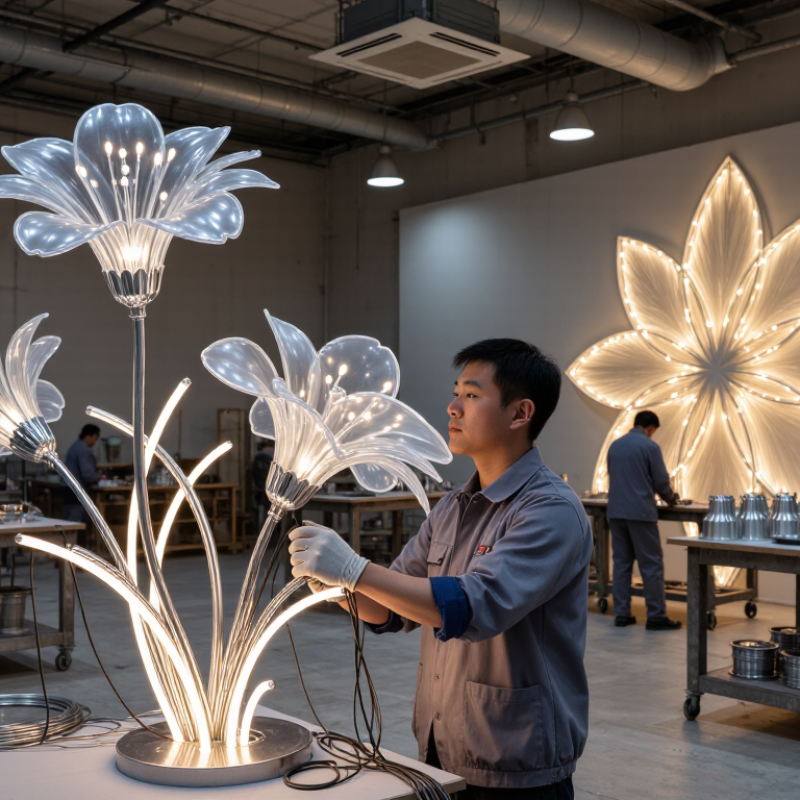
Handcrafted Lighted Sculptures often begin with a simple sketch, then develop through metal bending, resin forming, glass shaping, and LED installation. A reliable manufacturer should explain each stage clearly. Look for visible weld quality, even surface finishing, secure wiring, and consistent illumination. A sculpture may look impressive in photographs. Details can disappear online.

Light artist James Turrell once said, “Light is not so much something that reveals, as it is itself the revelation.” His words reflect the central challenge of this industry. Manufacturers must shape both the object and the atmosphere around it. A floral sculpture should cast gentle shadows across a wall, while a large outdoor piece may need weather-resistant coatings, protected connectors, and suitable ingress protection ratings.

Experience matters. Ask for production samples, material specifications, lighting tests, packaging photographs, and inspection records. Discuss color temperature, dimming systems, replacement parts, and installation requirements before placing an order. Certifications should match the destination market, not merely appear in a product brochure.

Some suppliers will be excellent. Others may need closer supervision. That is normal, and worth acknowledging. A polished catalog does not guarantee careful workmanship. The strongest partnerships grow through factory communication, prototypes, documented quality checks, and honest revisions. This guide introduces manufacturers that merit consideration while encouraging buyers to verify every important claim.
China Top Handcrafted Lighted Sculptures Manufacturers

Definition and Features of Handcrafted Lighted Sculptures in China

China Top Handcrafted Lighted Sculptures Manufacturers

Handcrafted lighted sculptures combine decorative art, structural fabrication, and controlled illumination. In China, makers commonly shape metal wire, resin, glass, wood, or fabric around a concealed LED system. The result is not simply a lamp. It is a three-dimensional object designed to create mood, depth, and visual movement.

Grand View Research estimated the global decorative lighting market at over US$25 billion in 2023. IMARC Group also reported that the global LED lighting market reached about US$78 billion that year. These figures explain the growing demand for efficient, customizable illuminated art. Chinese workshops often support this demand through sampling, hand-finishing, modular frames, and tailored color temperatures. A deer sculpture may use warm LEDs behind translucent resin, while a floral form may hide wiring inside thin metal stems. Small details matter.

Practical quality depends on more than appearance. Experienced manufacturers check weld points, cable routing, heat management, surface consistency, and light diffusion. They should also document material specifications and electrical testing for each order. The category is still not perfectly standardized. A beautiful prototype can reveal uneven brightness during long operation. That weakness deserves honest review. Buyers should request a working sample, measured power data, packaging tests, and clear maintenance instructions before approving production. In my view, reliable craftsmanship is visible in the unseen parts: clean joints, stable bases, protected connections, and repeatable handmade details.

Materials and Craftsmanship Used in Lighted Sculpture Production

China Top Handcrafted Lighted Sculptures Manufacturers

Materials and craftsmanship determine the quality of every lighted sculpture. Experienced Chinese manufacturers commonly use stainless steel, fiberglass, resin, acrylic, and aluminum. Each material serves a different purpose. Stainless steel supports outdoor structures and resists corrosion. Fiberglass creates large forms without excessive weight. Resin captures fine textures, such as feathers, scales, and carved patterns.

Lighting systems need equal attention. Skilled teams often install energy-efficient LED modules behind diffusing acrylic or fabric layers. This creates a softer glow and reduces harsh hotspots. Hand finishing remains important. Craftspeople sand visible seams, apply several paint layers, and check the sculpture under actual lighting. Welding quality also matters, especially for outdoor displays exposed to wind and rain. Reliable workshops test wiring, insulation, drainage, and structural stability before delivery. Certifications and clear inspection records improve confidence, but paperwork cannot replace physical testing.

Tips: Ask for material samples, process photos, and a prototype before mass production. Confirm the intended environment, dimensions, light color, and protection rating. A warm white light may suit a hotel lobby, while stronger illumination may work better outdoors. Check cable access and maintenance points early. Small oversights become expensive later. Even experienced teams can miss a detail. That is worth reviewing.

Leading Manufacturing Regions and Workshop Specializations

China’s handcrafted lighted sculpture industry is shaped by regional workshop strengths. Guangdong is known for metal forming, welding, and electrical assembly. Workshops there often build large steel frames with warm LED systems. Zhejiang specializes in resin, fiberglass, and painted decorative surfaces. Its smaller studios are useful for detailed figures and textured finishes. Jiangsu has strong woodworking and mixed-material production. Many workshops combine carved wood, metal joints, and concealed lighting.

Workshop specialization matters more than location alone. A skilled metal shop may create a stable frame but lack refined hand painting. A sculpture studio may deliver beautiful finishes but outsource wiring. Ask for process photos, material samples, and a working prototype. Check cable routing, switch access, base stability, and heat control. I have seen attractive samples fail because the rear panel was difficult to repair. That detail is easy to miss.

Tips: Match the workshop to the sculpture’s main material. Request a sample under normal room lighting. Confirm production tolerances before approval. Use written inspection points for color, welds, brightness, and packaging. Do not judge craftsmanship from photographs only. Handmade work includes small differences, but uneven joints or exposed wires need correction. A practical review should include assembly time and future maintenance, not only appearance.

How to Evaluate China’s Top Lighted Sculpture Manufacturers

Evaluating China’s Top Lighted Sculpture Manufacturers

A reliable evaluation begins with physical evidence, not attractive catalog images. Request a finished sample with the same metal, coating, lighting system, and dimensions as your planned order. Inspect welds closely. Uneven seams often reveal rushed production. Check whether the sculpture stands firmly on a level floor and whether cable exits are protected from sharp edges.

Ask for material specifications, lighting test records, and installation instructions. A professional manufacturer should explain metal thickness, surface treatment, ingress protection, and expected operating conditions clearly. Review sample inspection reports rather than accepting general promises. Confirm who performs electrical testing and request dated photographs or videos from production. Documentation matters.

Visit the workshop when possible, or arrange a live video inspection. Look for organized material storage, labeled components, and workers using consistent assembly methods. I once trusted a polished showroom too quickly; the delivered finish showed small color differences between sections. That mistake changed my process. I now request a signed color standard and approve a pre-production sample before mass production. Ask how defects are recorded, corrected, and rechecked. Clear answers usually indicate stronger quality control, but no factory is flawless. Their response to problems may be more revealing than their sales presentation.

Applications and Customization Options for Lighted Sculptures

Lighted sculptures now serve more than decoration. They shape visitor flow in hotels, shopping centers, parks, festivals, and cultural venues. Fortune Business Insights valued the global LED lighting market at USD 78.95 billion in 2022. Its report projects strong growth through 2030. This trend supports demand for sculptural lighting with lower energy use and longer service life.

Applications influence every design decision. A lobby installation may need warm 2,700K light, quiet drivers, and soft shadows. An outdoor sculpture often requires sealed LED modules, corrosion-resistant frames, and an appropriate IP rating. Public gardens may need programmable scenes, while retail spaces often prefer steady brightness and simple maintenance.

Custom manufacturers can adjust height, surface texture, color temperature, brightness, and lighting direction. They can also build modular sections for easier transport and replacement.

Details matter.

The International Energy Agency reports that LED technology has become the dominant choice in new lighting sales. However, energy efficiency alone does not guarantee a successful sculpture. Glare, heat, cable access, and cleaning requirements can weaken an attractive concept.

In project reviews, I would request photometric tests, structural drawings, sample finishes, and a maintenance plan before production.

Some early concepts still overlook wind exposure and viewing distance. That is a useful warning, not a minor detail. Careful manufacturers should test a small illuminated sample first, then refine the full sculpture around the actual space.

FAQS

Which materials are commonly used for lighted sculptures?

Stainless steel supports outdoor frames. Fiberglass keeps large forms lighter. Resin captures feathers, scales, and carved textures. Acrylic or fabric softens the light.

How can the lighting look soft instead of harsh?

Install energy-efficient LED modules behind diffusing acrylic or fabric. This reduces bright hotspots. Always inspect the sculpture under real lighting.

What should outdoor sculptures include?

Outdoor pieces need corrosion-resistant frames, sealed lighting modules, suitable protection ratings, drainage, and stable bases. Wind exposure requires structural testing.

How do workshops check craftsmanship?

Skilled teams sand visible seams, apply several paint layers, and inspect welds. They also test wiring, insulation, heat control, and stability.

Which workshop specialization should buyers choose?

Match the workshop to the main material. Metal specialists may build stronger frames. Decorative studios may provide finer painting. Wiring might be outsourced, so confirm responsibility.

What details should be approved before mass production?

Request material samples, process photos, and a working prototype. Confirm dimensions, light color, brightness, cable access, and maintenance points.

Can lighted sculptures be customized for different spaces?

Yes. Manufacturers can adjust height, texture, color temperature, brightness, lighting direction, and modular sections. A hotel lobby may suit warm, quiet illumination.

What problems are easy to overlook?

Rear panels may be difficult to repair. Cables can become inaccessible. Wind, glare, heat, and viewing distance may also be underestimated. Small mistakes become expensive.

Is energy efficiency enough to guarantee a successful sculpture?

No. Efficient lighting still needs good heat control, safe wiring, suitable brightness, and easy cleaning. I would request photometric tests before approval.

Why should buyers test a small illuminated sample first?

A sample reveals shadows, glare, surface color, and brightness in the actual environment. Photos can mislead. Even experienced teams miss details sometimes.

Conclusion

China’s handcrafted lighted sculptures combine artistic design, skilled handwork, and integrated lighting to create decorative pieces with strong visual appeal. Handcrafted Lighted Sculptures are commonly made from materials such as metal, resin, fiberglass, fabric, wood, and recyclable components, with production techniques including shaping, carving, welding, painting, polishing, and careful light installation. Different manufacturing regions and specialized workshops may focus on holiday displays, garden figures, cultural decorations, commercial installations, or large custom projects.

When evaluating China’s top lighted sculpture manufacturers, buyers should consider design capability, material quality, craftsmanship, lighting safety, production consistency, customization support, lead times, and communication. These sculptures can be used in hotels, shopping centers, public spaces, festivals, exhibitions, gardens, and residential environments. Custom options may include size, shape, color, lighting effects, themes, surface finishes, and energy-efficient lighting systems, allowing each project to match its intended atmosphere and visual identity.
Ethan

Ethan

Ethan is a professional marketing specialist with a deep understanding of the company’s products, customers, and industry landscape. Through years of experience in product communication, market research, and content strategy, he has developed the ability to turn complex product information into......