
Choosing Bent Glass Metro Fusion Luminaires involves more than matching a room’s style. Glass curvature, metal finish, and light distribution all affect what you see at the table, counter, or hallway wall. Small details matter. A clear shade can expose the lamp and create glare, while a frosted surface may soften it. Neither choice is automatically better; the room and mounting height decide much of the result.
The International Energy Agency’s Tracking Buildings 2023 report estimates that building operations account for about 30% of global final energy use. That figure is not a claim that one decorative fixture will transform a building’s energy performance. It does show why sensible lighting choices deserve attention. The U.S. Department of Energy’s 2022 Solid-State Lighting R&D Opportunities report discusses performance factors such as efficacy, color quality, and control. Those are useful checks when comparing integrated LED models with replaceable-lamp designs.
A reliable comparison starts with the actual product specification: lumen output, color temperature, color rendering, dimming compatibility, and listed installation location. Then inspect the glass closely. Look for even bends, clean edges, and secure fittings; photographs can hide small flaws. I would check it twice. Also confirm dimensions, total weight, and ceiling-box support before ordering. A beautiful sample can mislead, and finish colors may shift under warm or cool lamps. The best choice balances appearance with measured light, safe installation, and practical maintenance—not a showroom impression alone.
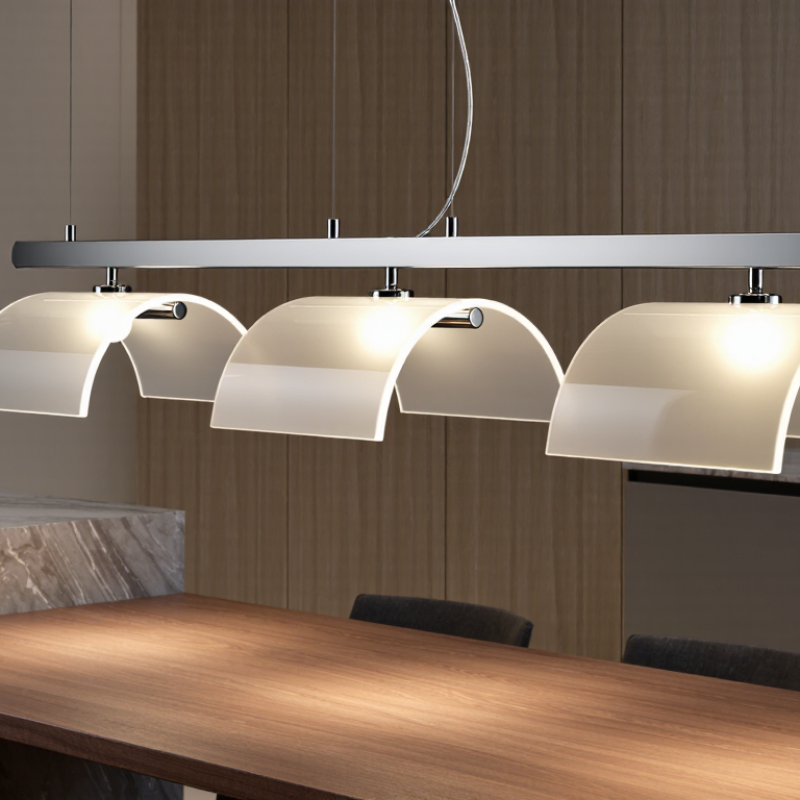
A bent glass Metro Fusion luminaire is shaped by more than its visible curve. Ask how the glass is formed, finished, and supported.
Heat-bent glass follows a controlled curve; clean, polished edges help reduce chips during handling. Inspect the sample from the side, not only from the front. Look for waviness, uneven tint, and small edge flaws under both daylight and the intended lamp. Details matter.
The frame should support the glass without pinching it. Metal and glass respond differently to temperature, so ask how the design allows for movement and how replacement parts are fitted. Check the diffuser, lamp position, and glare from normal seated or standing viewpoints. A beautiful curve can still create a harsh hotspot.
For energy context, the U.S. Department of Energy reports that LEDs use at least 75% less energy and last up to 25 times longer than incandescent lighting; these figures describe LEDs, not the glass itself. The International Energy Agency’s 2023 buildings report estimates that buildings account for 34% of global energy demand. That makes efficient light sources worth considering, though appearance and maintenance matter too.
One limitation: product samples rarely reveal long-term performance, so request care instructions and inspect finished units where possible.
Start with the space, not the fixture. Measure the room’s length, width, and ceiling height, then note its finishes. Dark walls and timber floors absorb more light than pale surfaces. A narrow hallway may benefit from a slim, evenly spaced arrangement, while a dining area often needs focused light above the table. Sketch the layout. It may reveal awkward gaps.
Next, decide what the luminaire should do. Bent glass can soften and spread light, but its shape and placement affect glare and shadows. For a kitchen island, check whether the light reaches the work surface without shining directly into someone’s eyes. In a lounge, use it as one layer alongside softer ambient lighting. View the fixture from seated and standing positions; a detail that looks balanced in a showroom may feel too bright at home.
Estimate the required output from the room area and the activity, then compare lumens rather than relying on wattage alone. Task areas need clearer, stronger illumination than decorative corners. Check product photometric data, beam distribution, colour temperature, and dimming compatibility before choosing. These figures help, but they cannot fully predict how glass will look against your actual walls. A small on-site test can be worthwhile. Lights rarely behave exactly as a plan suggests.
For bent glass Metro Fusion luminaires, inspect a full-size sample under the same light source planned for the room. Check for consistent thickness, smooth edges, and unwanted waves or bubbles; slight distortion can become obvious across a long, curved panel. ASTM C1036 offers a quality reference for flat glass, but ask which requirements still apply after bending and fusion. Fusion seams may be decorative, yet uneven seams can look accidental. Look closely.
Compare clear, satin, and tinted glass in daylight and after dark. Frosted surfaces soften glare, while clear glass reveals the lamp and internal details. Ask how each finish handles fingerprints, cleaning, and color shifts from warm or cool lamps. Confirm that coatings suit the glass and intended cleaning method. Small sample chips can mislead; request a larger sample if the finish matters.
Also compare the metal finish with the glass edge and fusion pattern. Brushed metal hides handling marks better than polished metal, though it may look less crisp. The U.S. Department of Energy’s Energy Saver guidance reports that LEDs use at least 75% less energy and last up to 25 times longer than incandescent lighting. That makes lamp access and heat compatibility worth checking, not just appearance. I would still avoid choosing from photographs alone.
How to Choose Bent Glass Metro Fusion Luminaires?
Start with the fixture’s width, height, and projection from the wall or ceiling. Bent glass can extend farther than its central frame suggests. Compare those measurements with the room, nearby doors, and furniture. Over a dining table, check that the glass clears seated guests’ sightlines. In a narrow hallway, even a small projection can feel intrusive. I would recheck the product dimensions against the actual installation spot; a sketch can make the scale easier to judge.
Next, confirm the mounting method and electrical details. Check whether the fixture suits a standard ceiling box, a wall box, or a specific support bracket. The box and surface must safely support the fixture’s weight. For electrical compatibility, verify the listed voltage, lamp type, and dimmer requirements. Integrated LED units may need a compatible dimmer, while replaceable bulbs offer different options. Do not assume an existing dimmer will work. A qualified electrician can verify wiring and support before installation.
Tips: Measure the fixture’s full outer edge, not just its base. Photograph the mounting point and note the box location before ordering. Keep a little clearance around the glass for cleaning and bulb access. Small details are easy to miss, and measurements can still be wrong—so check them twice.
How to Choose Bent Glass Metro Fusion Luminaires?
Bent-glass Metro Fusion luminaires pair curved panels with layered light. Inspect the whole assembly, not just its showroom silhouette. Look for smooth glass edges, secure fittings, and clear installation instructions. Ask whether the fixture suits its intended location and mounting surface. Request safety documentation and confirm that the installer can follow the specified requirements. A beautiful curve is not enough.
Compare energy use using the luminaire’s stated wattage and light output, rather than judging brightness by eye. Check whether dimming is compatible with your controls. For maintenance, find out how glass panels are removed and cleaned, and whether replacement parts are available. Dust trapped along a curved edge can be easy to miss. Ask the supplier about warranty coverage, lead times, and technical help after installation. A polished sample may not reveal awkward access; that deserves a second look.
Tips: Request a product data sheet, cleaning guidance, and written spare-part details before ordering. Small details matter. If supplier answers are vague, pause and ask again. It is a little inconvenient, but better than discovering a maintenance problem after the fixture is installed.
Assess safety, energy use, maintenance, and supplier support.
Suggested buyer-defined evaluation weights, not product test results: prioritize safety certification and installation requirements, then compare input watts and light output. Check glass-cleaning access and replaceable components, and confirm warranty terms, spare-parts availability, and technical support.
Measure the room’s length, width, and ceiling height. Note dark walls, timber floors, and other finishes. Sketch the layout.
A kitchen island needs clear light on its work surface. A dining area often benefits from focused light above the table. Hallways may need even spacing.
Consider room size and activity, then compare lumens rather than wattage alone. Task areas usually need stronger light than decorative corners. Plans can be wrong.
Check the fixture from both seated and standing positions. See whether light reaches the counter without shining into someone’s eyes. A showroom view may mislead.
Inspect glass edges, fittings, and installation instructions. Confirm the fixture suits the location and mounting surface. Request safety documents.
Compare stated wattage with light output. Check that dimming works with your controls. Brightness by eye can be unreliable.
Ask how the glass panels come off and how to clean them. Dust can hide along curved edges. Check whether replacement parts are available.
Request a product data sheet, cleaning guidance, warranty details, lead times, and written spare-part information. Vague answers deserve a follow-up. Small details matter.
Choosing Bent Glass Metro Fusion Luminaires starts with understanding how their curved glass and fusion construction shape both appearance and light distribution. Consider the room’s style, size, and intended use, then determine the brightness and coverage needed for comfortable, effective illumination. Compare glass clarity, thickness, fusion quality, and available finishes to find an option that suits the space and offers consistent craftsmanship.
Before selecting a fixture, check its dimensions, mounting requirements, and compatibility with the existing electrical setup. Also review safety features, energy use, and how easily the glass and other parts can be cleaned and maintained. Clear product information and dependable supplier support can help resolve installation or care questions. By weighing design, performance, fit, and long-term upkeep together, you can choose a luminaire that complements the space while meeting practical lighting needs.