
A Bridge Arm Floor Lamp can solve a practical problem and change how a room feels. Its long, curved arm reaches over a sofa or reading chair, while the weighted base stays beside it. In a small living room, that reach may free a side table from a bulky lamp. But reach alone is not enough. The shade should direct light where you need it, and the base should sit securely without obstructing a walkway.
In 2026, choosing well means checking the details before focusing on the finish. Measure the space from the base to the intended reading spot. Compare the arm’s reach, overall height, shade shape, bulb compatibility, and control placement. A dimmer can help shift from focused reading light to a softer evening glow, though not every model includes one. As architect Le Corbusier wrote, “Architecture is the masterly, correct and magnificent play of masses brought together in light.” His words offer a useful reminder: light affects how we experience a space, not just how clearly we see. Still, a striking silhouette cannot compensate for a wobbly base or a shade that sends glare into your eyes. This guide explores how to balance proportion, stability, light quality, materials, and everyday use. The best choice may not be the most dramatic one. It should fit the room, feel comfortable in daily use, and make sense for the way you actually live.
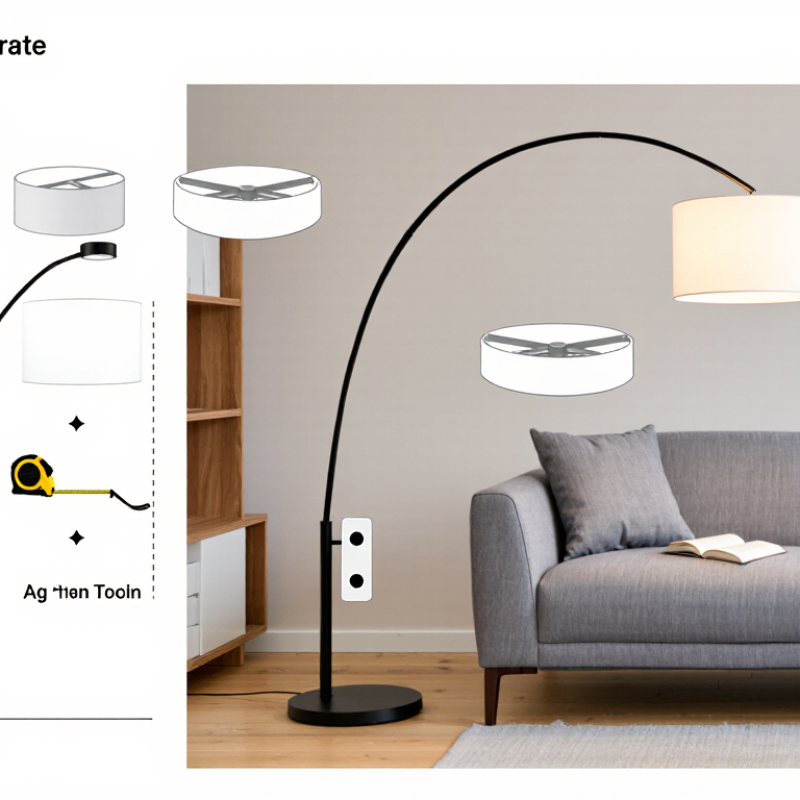
A bridge-arm floor lamp combines a weighted base, upright stem, projecting arm, shade, socket, wiring, and switch. Its arm may be fixed, jointed, or counterbalanced, letting the shade reach over a sofa or reading chair. The base should feel steady on the floor, while the arm should hold its position without sagging. At the elbow, inspect the hinge and fasteners. Small parts matter. A loose joint can make precise aiming frustrating.
The shade controls where light falls: an opaque metal shade directs a tighter pool, while a translucent shade softens it. Check that the bulb is easy to replace and that the switch is reachable from your seat. U.S. Department of Energy Energy Saver guidance reports that LEDs use at least 75% less energy than incandescent bulbs. It also says they can last up to 25 times longer. This is useful when the lamp gets nightly use, though a dimmer must be compatible with the bulb. The arm can still feel awkward in a small room.
Tips: Measure from the base to your chair, then check the arm’s reach and shade height. Aim the light at a page, not directly at your eyes. If possible, test the lamp in place; a little wobble may be more noticeable at home than in a showroom.
How to Choose Bridge Arm Floor Lamps in 2026?
Defining Your Lighting Needs, Room Size, and Placement
Start with the task. Will the lamp illuminate a paperback, knitting, or a dark corner? For reading, position the shade slightly behind and beside your shoulder. This helps keep the bulb out of your direct line of sight. Check that the adjustable arm reaches your seat without crossing a walking path. Measure twice. A lamp that looks compact in a showroom can feel imposing beside a narrow chair.
Room size matters, but so does furniture layout. In a small room, look for a slim base that can tuck behind a sofa or beside a side table. In a larger space, confirm the arm can reach the intended seating area; a tall lamp is not automatically a useful one. Mark the base location with tape, then test the route around it. I still sometimes misjudge how much space an extended arm occupies. A quick floor-plan sketch can reveal that.
Choose brightness and bulb type for the actual task, not just the lamp’s appearance. The U.S. Department of Energy reports that LEDs use at least 75% less energy and can last up to 25 times longer than incandescent bulbs (Energy Saver, “LED Lighting”). Check the fixture’s bulb compatibility and dimmer requirements before buying. A dimmer is useful when the same chair serves for focused reading and softer evening light. Not always necessary.
A bridge-arm floor lamp should reach the spot where you read, not merely look balanced beside a chair. Measure from the lamp’s base to the edge of your book or work surface. A reach of roughly 18 to 24 inches may suit many seating areas, but furniture placement changes the answer. Measure twice. Also check the arm’s clearance: a low ceiling, shelf, or nearby doorway can make an otherwise useful lamp awkward. Height matters just as much. The shade should direct light toward your page without shining into your eyes when you sit down.
Materials affect both stability and everyday upkeep. A solid metal frame often feels steady, while a heavy base can help prevent wobbling on carpet. Wood adds warmth, but inspect joints and the arm’s support before choosing a taller design. Small details matter. Look for a shade that tilts or swivels, plus a switch you can reach from your seat. Dimmable output is helpful when moving from focused reading to softer evening light; check that the bulb and control are compatible. One trade-off is easy to miss: more joints offer greater adjustment, but can loosen over time. A quick hands-on check can reveal whether the arm holds its position or slowly drifts.
How to Choose Bridge Arm Floor Lamps in 2026?
Start with the socket and the lamp’s maximum wattage, both listed on its label. Choose a bulb with the matching base and a wattage within that limit. A dimmable bulb only works properly when the lamp’s switch supports dimming. Check before buying. For a reading corner, a warm-white LED can make pages comfortable to read without adding much heat. Still, light color is personal; a bulb that looks cozy in a shop may feel too yellow at home.
Energy use depends on both the bulb and how long it stays on. LEDs typically use less electricity than traditional incandescent bulbs for similar brightness. Compare lumens for light output and watts for power draw. A 9-watt bulb, for example, may provide useful reading light, but shade shape and arm position affect what reaches the page. That part is easy to overlook. Adjust the arm before deciding the lamp is too dim.
Stability and safe placement matter as much as brightness. Look for a broad, heavy base, then test whether the extended arm makes the lamp wobble. Keep it on a firm, level floor; thick rugs can make a narrow base less steady. Route the cord away from walkways, and leave space between the bulb and nearby fabric. Check that the cord, plug, and joints show no damage. A little wobble? Reposition it, then reassess.
| Check | What to Verify | Practical Reference | Why It Matters |
|---|---|---|---|
| Socket and bulb fit | Match the bulb base to the lamp’s socket and confirm the bulb fits inside the shade. | E26 is common in North America; E27 is common in many other regions. Check the lamp label, since socket type varies by model and market. | A bulb with the wrong base will not fit safely. An oversized bulb may touch the shade or restrict airflow. |
| Maximum wattage | Check the maximum wattage marked on the lamp or in its instructions. Do not exceed it. | Compare the bulb’s actual wattage—not its “incandescent equivalent”—with the lamp’s stated limit. | Excess heat can damage the socket, wiring, or shade and may create a fire risk. |
| Light output and energy use | Choose by lumens for brightness and watts for electricity use. | An LED producing about 800 lumens commonly uses roughly 8–12 W; a traditional incandescent bulb producing similar light uses about 60 W. At 3 hours daily, that is about 8.8–13.1 kWh per year for the LED versus 65.7 kWh for the incandescent bulb. | Lumens make brightness comparisons more useful than wattage alone; lower-wattage LEDs generally use less electricity for similar light output. |
| Dimming compatibility | If the lamp has a dimmer, check that the bulb is marked as dimmable and is compatible with the lamp’s dimmer type. | Some LED bulbs may flicker, buzz, or have a limited dimming range with incompatible dimmers. | Compatibility helps prevent distracting performance problems and supports reliable dimming. |
| Base and arm stability | Check that the base sits flat and that the arm and shade stay in position without wobbling or tipping. | Test the lamp on a level floor and gently reposition the arm as directed by the manufacturer. Keep the base clear of loose rugs and walkways. | A long, projecting arm can shift the lamp’s balance, especially if the base is bumped or placed on an uneven surface. |
| Electrical safety | Inspect the plug, cord, socket, and joints for damage. Look for a recognized safety certification appropriate to the country of use. | Examples in North America include UL, ETL, and CSA marks. Follow the lamp’s instructions and use it with the voltage specified on its rating label. | Certification, intact wiring, and correct voltage help reduce the risk of electric shock, overheating, or equipment damage. |
| Heat and clearance | Keep the bulb and shade clear of curtains, paper, bedding, and other combustible materials. | Follow the manufacturer’s required bulb type and clearances; do not cover the shade or lamp. | Even when using an LED, the lamp needs appropriate ventilation and safe distance from materials that could be affected by heat. |
| Cord placement and everyday use | Route the cord where it cannot be pulled, pinched, or become a trip hazard. Use the switch as instructed. | Do not run a cord under a rug or furniture, and unplug the lamp before cleaning or changing a bulb. | Careful placement and handling help prevent falls, cord damage, and accidental contact with live electrical parts. |
A bridge arm floor lamp can direct light over a sofa or reading chair without taking up table space. Start with the room, not the finish. Measure the seat height and lamp reach, then check that the shade clears shelves and headrests. A compact base suits tighter rooms, while a heavier base may feel steadier on a thick rug. Measure twice.
Set a budget that includes the bulb and any delivery costs. At lower price points, inspect the joints, base, and shade alignment; a wobbly arm can become irritating quickly. Mid-range models may offer adjustable arms or dimming, but confirm what is included. Higher-priced options can have better finishes, yet cost alone does not guarantee easy adjustment or lasting comfort. Check the return policy before buying.
For a calm interior, match the lamp’s finish to one existing detail, such as a cabinet handle or picture frame. Black metal can add contrast to pale walls, while warm brass tones often sit comfortably beside wood. Keep the shade shape in proportion to nearby furniture; an oversized shade can crowd a small reading corner. Still, perfect matching can make a room feel stiff. A slightly different finish may look more natural.
Match the bulb base to the socket and stay within the lamp’s maximum wattage. Check whether the switch supports dimming before choosing a dimmable bulb.
LEDs usually use less electricity than incandescent bulbs for similar brightness. Compare lumens for light output and watts for energy use. A 9-watt bulb may work, but arm position matters too.
Warm-white light often feels gentle on the eyes and adds little heat. But color is personal. A bulb that looks cozy in a shop may seem too yellow at home.
Look for a broad, heavy base, then extend the arm and watch for wobbling. Place the lamp on a firm, level floor. Thick rugs can make some bases less steady.
Keep the cord out of walkways and leave space between the bulb and nearby fabric. Check the cord, plug, and joints for damage. A little wobble? Reposition it and test again.
Measure the seat height and lamp reach. Make sure the shade clears shelves and headrests. A compact base can suit a tight room, while a heavier one may feel steadier on a thick rug.
Include the bulb and delivery costs in your budget. Check the arm joints, base, and shade alignment, especially on lower-priced models. A higher price does not guarantee easier adjustment.
Echo one existing detail, such as a cabinet handle or picture frame. Black metal can contrast with pale walls; warm brass often works beside wood. Perfect matching can feel stiff, though. A slight mismatch may look more natural.
Choosing Bridge Arm Floor Lamps in 2026 starts with understanding how their extended, adjustable arms and supporting components direct light. Consider what you need the lamp to do, such as illuminate a reading chair or brighten a work area, then assess your room’s size and available placement space. The lamp’s reach and height should suit both the furniture and the people using it.
Compare materials, arm movement, and the ease of adjusting the light to find a design that is practical for everyday use. Check that the lamp works with suitable bulbs, uses energy efficiently, and has a stable base and safe construction. Finally, set a budget that accounts for the features you value, and choose a finish and shape that complement your interior style. A well-matched lamp can provide useful, adaptable lighting without overwhelming the room.