
Decorative Stained Glass Panels can bring color, privacy, and a distinct focal point to a room. Choosing one is not only about finding a pattern you like. The panel must also suit its location, available light, and intended use. A design that looks vivid in a shop may appear quite different beside a shaded hallway window.
Start by noting the opening’s measurements and the light it receives throughout the day. Clear glass can keep a space bright, while denser colors may soften glare and reduce visibility. Think about the room’s existing details, too: a warm wood frame, pale walls, or simple hardware can each influence which colors feel balanced. Small samples help. They are not perfect substitutes for seeing a full panel in place, but they can reveal surprising color shifts.
Consider how the panel is made, supported, and installed. Ask about glass types, construction methods, frame compatibility, and care requirements; reliable answers should be specific rather than vague. For an exterior opening or a large panel, confirm that the design and mounting approach suit the site, and consult a qualified installer when needed. Safety matters. A beautiful piece can still be the wrong choice if it blocks useful light or does not fit securely. It is easy to focus on the pattern and overlook these practical details. Pause before deciding. Compare appearance, function, and workmanship together, then choose a panel that feels right in the room—not just in a photograph.
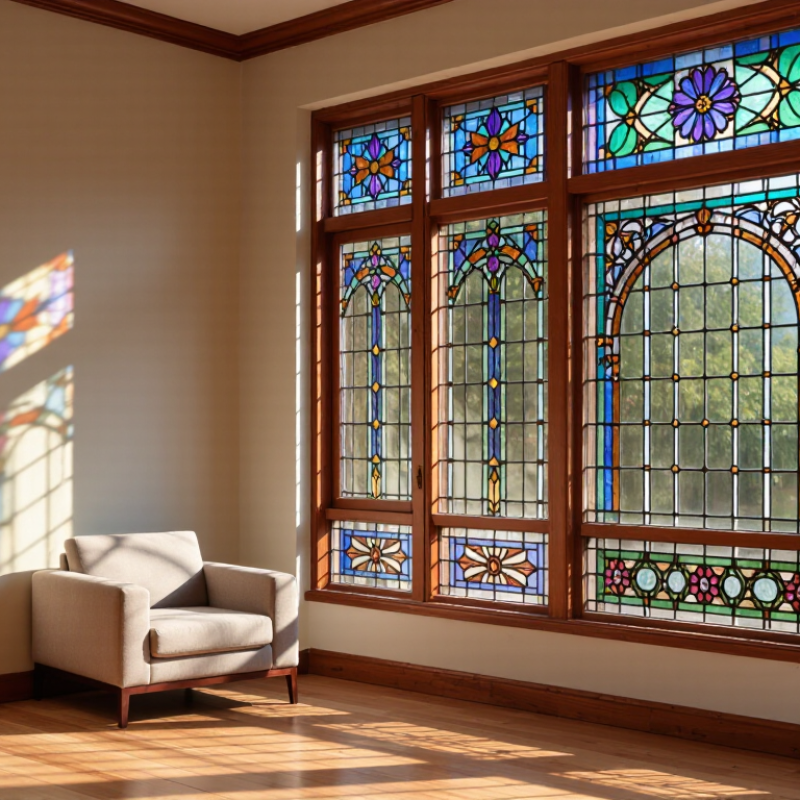
Decorative stained glass panels combine colored or textured glass pieces to shape light and add visual interest. They change a room’s atmosphere without relying on paint or fabric. A blue panel might cast cool shapes across a hallway floor, while rippled clear glass softens a view and still lets daylight through.
Panels can be used as window inserts, cabinet doors, room dividers, or accents near an entry. In a bathroom, textured glass may provide privacy, but its opacity and placement matter. In a kitchen cabinet, a small design can break up a long row of plain doors. Some panels are fixed; others sit in frames that make cleaning or repair easier. Ask how the panel will be supported, especially in a door that moves often.
Choosing a panel involves more than matching colors. Consider the direction of daylight, the view you want to keep, and nearby materials such as wood trim or tile. Ask about installation and maintenance before ordering. A sample helps, but it may not show the full effect. Light changes. That detail is easy to underestimate. A pattern that looks calm on paper may feel busy once sunlight passes through it.
How to Choose Decorative Stained Glass Panels
Assess the Installation Location, Dimensions, and Light Conditions
Start by studying the opening at different times of day. A panel facing east may catch a sharp morning glow, while a north-facing one often receives cooler, steadier light. Note nearby trees, roof overhangs, and lamps; each changes how colors appear. Measure the visible glass area, not just the frame, and check depth and hardware before ordering. A panel that looks generous on paper can feel cramped beside a narrow door stile. It happens.
Light also affects comfort and energy performance. The U.S. Department of Energy’s Energy Saver guidance estimates that window heat gain and loss account for 25–30% of residential heating and cooling energy use. That figure applies to windows broadly, not to stained glass alone. Still, it is a useful reason to consider orientation and the existing glazing. Ask a qualified installer whether the panel will sit inside, replace, or layer with the current window. Check NFRC-rated U-factor and solar heat gain coefficient values for the complete window assembly; decorative glass does not have a universal rating.
Tips: Tape a paper outline over the opening and observe it in morning and afternoon light. Photograph the space, too. Colors can look unexpectedly dark indoors, and I would recheck the measurements before committing.
Compare example panel dimensions by area, then check your opening size, installation location, and available light before choosing a panel.
Areas are calculated from the example width and height shown. These are illustrative sizes, not standard dimensions. Measure the opening, allow for the mounting method, and consider how direct sunlight and indoor light will affect the finished look.
Decorative stained glass should be chosen for its light, setting, and construction—not color alone. Clear leaded glass keeps a hallway bright, while opalescent glass softens direct sun and hides a view. Textured options, such as rippled or hammered glass, scatter light across floors and walls. Color shifts in daylight. Take samples to the window and check them morning and afternoon; a deep blue that looks calm indoors may turn nearly black at dusk. Pattern scale matters, too: narrow borders suit small windows, while large geometric shapes need room to read clearly.
Crafting method affects appearance and upkeep. Traditional lead came creates visible lines between glass pieces; copper-foil construction allows finer curves and smaller details. Ask the maker how joints are supported and how the panel will be secured, especially in a door or other high-use opening. The U.S. Department of Energy’s Energy Saver guidance estimates that heat gain and loss through windows account for 25–30% of residential heating and cooling energy use. That figure concerns windows generally, not stained glass alone, but it makes placement and glazing worth discussing. The National Fenestration Rating Council’s rating framework can help compare whole-window energy performance; decorative glass by itself does not provide that rating. A layered unit may reduce drafts, though it can alter color and reflections. I would test a small sample first. It is easy to overlook.
Decorative stained glass can soften a room’s view without blocking daylight. Before choosing a panel, consider what you need to conceal. Textured or opalescent glass blurs faces and movement, while clear bevels preserve sharper views. Stand outside the window at dusk; interior lights can make privacy weaker than it seems. A sample helps. A showroom sample can mislead.
Tips: Compare samples from inside and outside, in daylight and after dark. Check the view from the actual sidewalk or neighboring room. Small differences matter.
Match durability and safety to the panel’s location. A window near a door, floor, or busy walkway may need safety glazing and secure professional installation. Ask a qualified installer about suitable glass and support for your opening. Then check the frame. A strong panel can still perform poorly in a loose or damp frame. For routine care, use a soft cloth, mild soap, and water; abrasive pads may scratch decorative surfaces. Inspect the edges and frame occasionally for looseness or moisture. I would not rely on appearance alone: privacy, safety, and upkeep are easy to overlook when a panel looks beautiful.
Start with the full project cost, not the panel price alone. Measure the opening at several points; older frames are often slightly out of square. Measure twice. Ask whether the quoted price includes a frame, delivery, and fitting. A custom shape or textured glass can raise costs, while a simpler design may suit a tighter budget. Leave room for surprises, such as repairing a loose sash or replacing worn seals. That matters.
Next, match the panel to the way it will be installed. A panel fitted inside an existing window may need different supports from one mounted in a cabinet door or room divider. Check the opening depth, frame material, and available fixing points before ordering. Glass has weight. If the frame flexes, or the panel will sit in a damp or busy area, ask a qualified installer about suitable support and protection. Request a written estimate that separates materials, preparation, and labor. It is easy to focus on color samples and overlook the practical details; even a careful plan can miss something. A small paper template can help reveal clearance problems before the panel is made.
| How to Choose Decorative Stained Glass Panels - Choose a Panel That Fits Your Budget and Installation Requirements | |||||
|---|---|---|---|---|---|
| Panel type | Typical planning budget | Best suited for | Installation requirements | Light and privacy | What to check before buying |
| Ready-made hanging panel | About $50–$200 per panel; price varies with size, glass, and workmanship. | Decorative accents in front of an existing window. | Usually hangs from a suitable hook or bracket. Secure the fixing into a structural support, not just drywall. | Filters daylight; privacy depends on the pattern and glass opacity. | Check panel weight, hanging hardware, dimensions, and whether the panel is intended for indoor use. |
| Custom leaded-glass panel | Roughly $150–$400 per square foot for planning; detailed designs can cost more. | Existing windows, transoms, and openings with unusual dimensions. | Requires accurate measuring and a compatible frame or retaining system. Professional fitting is advisable for large or overhead panels. | Can be designed to balance daylight, color, and privacy. | Confirm finished size, support method, glass type, design approval, and whether fitting is included. |
| Cabinet or door insert | Often about $80–$250 per square foot, excluding any cabinet or door alterations. | Cabinet doors, interior doors, and other small framed openings. | Needs a compatible sash or door frame. The panel must be retained securely and should not interfere with hinges or latches. | Adds color and obscures contents to varying degrees; textured or patterned glass generally offers more visual screening. | Measure the visible opening and frame depth; check thickness, edge support, and clearance around hardware. |
| Insulated stained-glass unit | Approximately $300–$800 per square foot for planning, depending on construction and design. | Exterior windows where weather protection and improved thermal performance matter. | Must be sized for the window system and installed with weather-appropriate seals. Professional installation is generally recommended. | Provides colored or filtered daylight; privacy depends on the selected design and glass. | Verify unit thickness, frame compatibility, weather sealing, warranty terms, and whether the price includes removal and installation. |
| Large or complex architectural panel | Often $400 or more per square foot; structural work and installation can add substantially to the total. | Large feature windows, stairwells, and custom architectural openings. | May require a reinforced frame, lifting equipment, site access planning, and specialist installation. | Can create a strong decorative effect; brightness and privacy vary with panel size and glass selection. | Request a site assessment and itemized quote covering engineering, framing, delivery, fitting, and finishing. |
| Budget note: These broad planning ranges are illustrative, not quotes. Prices vary by location, panel size, glass selection, design complexity, frame condition, and labor. Confirm local pricing and installation costs before ordering. For exterior, overhead, or safety-critical locations, check applicable building and glazing requirements. | |||||
Measure the visible glass area, opening depth, and fixing points. Check the opening at several spots. Older frames can be slightly uneven.
East-facing glass may catch bright morning light. North-facing windows often receive steadier, cooler light. Nearby trees and roof overhangs also change the effect.
Tape a paper outline over the opening. View it in morning and afternoon light. A photo can help, though colors may look different on screen.
Clear glass keeps a hallway bright. Opalescent glass softens sunlight and obscures views. Rippled textures scatter light across nearby floors and walls.
Daylight changes how colors appear. A deep blue sample may look calm indoors but nearly black at dusk. Small samples help.
Lead came creates visible lines between pieces. Copper foil can support finer curves and details. Ask how joints and panel edges will be supported.
Consider materials, delivery, preparation, and fitting. Custom shapes or textured glass may cost more. Leave room for worn seals or frame repairs.
Window heat gain and loss account for an estimated 25–30% of home heating and cooling energy use. That estimate applies to windows broadly, not stained glass alone. Ask an installer about the complete assembly’s ratings. I’d double-check.
Choosing Decorative Stained Glass Panels begins with understanding their purpose, whether they are intended to add color, create a focal point, or soften incoming light. Consider where the panel will be installed, measure the available space carefully, and observe how natural and artificial light change throughout the day. These factors can influence the panel’s size, appearance, and visual effect.
Next, compare glass types, colors, patterns, and crafting methods to find a style that suits the room. Think about how much privacy you need, as well as the panel’s durability, safety, and maintenance requirements. Finally, set a realistic budget and confirm that the chosen panel works with your installation conditions. Balancing appearance, practical needs, and cost can help you select a decorative feature that complements your space and remains suitable for everyday use.