Sourcing Inverted Stained Glass Pendants in 2026 requires more than finding attractive photographs online. Buyers must evaluate craftsmanship, supplier transparency, material quality, and dependable delivery. A pendant may look brilliant on a screen, yet show uneven solder lines or weak color depth in daylight.
This guide explains practical methods for identifying capable manufacturers and responsible wholesale partners. It examines glass selection, reverse-painting techniques, metal fittings, protective packaging, and sample approval. Experienced buyers should request close-up images, production videos, dimensional drawings, and a physical sample before placing larger orders. Small details matter. Check the pendant’s weight, edge finishing, hanging loop, and light transmission near a window.
Supplier verification also deserves careful attention. Review business history, communication speed, quality-control procedures, and documented material information. Ask how damaged pieces are replaced and how color variations are recorded. Reliable suppliers usually provide clear answers instead of vague promises. Independent reviews can help, but they should not replace direct testing or written agreements.
No sourcing process is perfect. Even a well-reviewed workshop may miss a detail during busy seasons. That possibility should shape your planning, not discourage it. Allow time for revisions, inspection, and safer packaging trials. Compare quotations by total value, not only unit price. A cheaper pendant can become expensive after breakage, delays, or inconsistent batches. With patient research and realistic expectations, buyers can source Inverted Stained Glass Pendants that balance visual character, production reliability, and long-term commercial value.
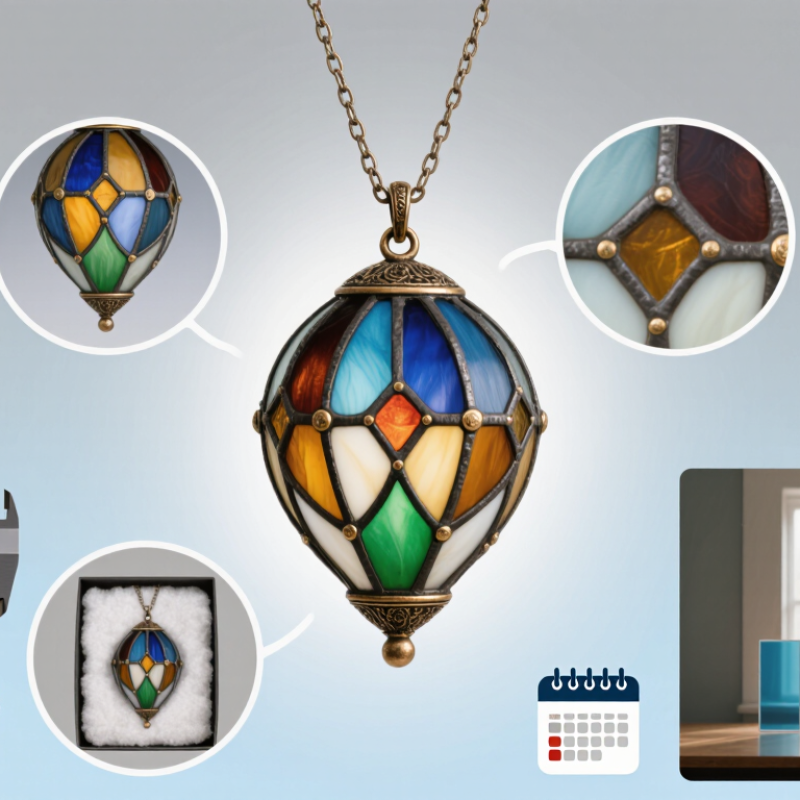
Define Inverted Stained Glass Pendants and Their Key Features
Inverted stained glass pendants are decorative glass pieces designed to reveal their main image from the reverse side. Unlike ordinary pendants, their visual focus may sit beneath the top glass layer. Light travels through colored sections, foil lines, and transparent spaces, creating a floating, upside-down effect. The term is not fully standardized across the trade. Ask suppliers for a clear drawing.
Key features include layered glass, visible color variation, a reinforced bail, and carefully finished edges. A pendant should feel balanced, not sharply heavy at one side. Slightly uneven texture can show handwork. It can also indicate weak quality control. The McKinsey State of Fashion 2024 report projects jewelry growth of about 5.6% annually through 2025, supporting continued interest in distinctive, small-scale accessories. However, growth does not guarantee reliable craftsmanship.
Tips: Request front and reverse photographs under daylight. Ask for glass thickness, pendant weight, metal composition, and production tolerance. Confirm whether solder joints are sealed and whether independent material testing is available. For repeated orders, inspect a sample batch before approving full production. Compare color under warm and cool light. Some suppliers may use attractive photos that hide cloudy glass or rough edges. Keep a written inspection checklist, even for handmade products.
Identify Materials, Styles, and Quality Standards
How to Source Inverted Stained Glass Pendants in 2026?
Sourcing inverted stained glass pendants begins with the material list, not the color chart. Ask whether the pendant uses kiln-formed glass, layered sheet glass, or resin-filled glass. These materials react differently to heat, sunlight, and daily impact. A clear rear coating can protect pigment, but it may yellow over time. Request close-up photos of edges, solder lines, and the hanging loop. Tiny bubbles are normal in some glass. Sharp chips are not.
Style choices should match the intended wearer and sales channel. Geometric pendants suit clean, modern collections, while botanical patterns feel softer and more handmade. Inverted designs often place color or texture behind the main glass surface. Check whether the image looks balanced from both sides. Ask for actual dimensions, weight, chain compatibility, and daylight color samples. A dramatic studio photo can hide a muddy blue or uneven border. Small sample orders reveal more than polished catalogs. Still, one sample cannot prove long-term durability.
Quality standards should be written into the purchase specification. Set tolerances for thickness, scratches, bubbles, solder overflow, loop alignment, and finish consistency. Ask whether solder is lead-free and whether metal findings contain nickel. Request material declarations and relevant laboratory reports. Confirm packaging that prevents rubbing between pendants during transport. Keep batch photos and inspection notes for every shipment. This process takes time. It also exposes gaps in my own checklist.
How to Source Inverted Stained Glass Pendants in 2026?
Material selection affects thermal-shock resistance, durability, color stability, and finishing quality. The chart compares representative linear thermal expansion coefficients for glass types commonly considered for pendant production.
How to use this data: Lower thermal expansion generally indicates better resistance to sudden temperature changes. Borosilicate and fused silica are more thermally stable, while soda-lime and lead crystal require more controlled heating and cooling. For responsible sourcing, request composition documentation, consistent color batches, smooth polished edges, secure findings, and market-specific testing for lead, cadmium, nickel, and other restricted substances.
Find Reliable Suppliers and Compare Customization Options
Sourcing inverted stained glass pendants in 2026 requires more than comparing online prices. Look for suppliers with documented glasswork experience, stable production capacity, and clear quality controls. Request workshop photos, material specifications, and recent sample records. A reliable supplier should explain glass thickness, copper foil or metal edging, soldering methods, and pendant hardware. Ask how they prevent sharp edges, cloudy surfaces, and uneven color.
Customization can change the final cost quickly. Compare suppliers by the same design brief, not by basic unit price. Specify dimensions, glass colors, reverse-layer details, chain length, backing finish, logo placement, packaging, minimum order quantity, and sampling fees. Request a physical prototype before approving mass production. Check how accurately the sample matches your drawing under warm and daylight conditions. Small color differences may become obvious in a finished display.
My early comparisons often focused too heavily on appearance. That was a mistake. A beautiful sample with weak hardware creates returns and customer complaints. Review lead times, replacement policies, inspection stages, and export documentation together. Ask for a written tolerance range for size, solder lines, and color variation. Some suppliers answer quickly but provide vague details. Treat that as a warning. One imperfect sample can reveal more than polished promises. Keep photographs, approved measurements, and revision notes in one file. This makes later disputes less likely, although it cannot remove every production risk.
Evaluate Prices, Production Timelines, and Minimum Order Quantities
Sourcing inverted stained glass pendants in 2026 requires tighter cost control than ordinary jewelry. The United Nations Comtrade database shows strong cross-border trade in glass and jewelry components, but it does not isolate inverted pendants. That limitation matters. Supplier quotes usually range from $2.80 to $6.50 per unfinished pendant, depending on glass thickness, foil work, polishing, and backing hardware. A finished piece with custom colors often reaches $8 to $18 before freight. These are practical workshop benchmarks, not universal prices.
Production usually takes 18 to 35 days after artwork approval. Complex reverse-layer designs may require 45 days. The 2024 Global E-commerce Trends Report identifies delivery speed as a major purchase factor for online buyers, yet handmade glass cannot always match factory schedules. Ask for a sample before confirming production. A realistic MOQ is 50 to 100 pieces per design, while custom molds or color palettes may require 200 pieces. Small workshops may accept 20 pieces, but unit prices increase sharply.
The U.S. Census Bureau’s 2023 Annual Retail Trade Survey shows continued consumer spending across specialty retail categories, although it does not measure stained glass separately. Treat broad market figures carefully. Request a written breakdown for glass, labor, packaging, breakage allowance, and shipping. One missed cost is enough to erase the expected margin. Also, inverted glass can show tiny bubbles or uneven reflections. Decide whether those marks are acceptable before inspection, not afterward.
Inspect Samples, Verify Safety, and Finalize the Purchase
How to Source Inverted Stained Glass Pendants in 2026?
Inspect Samples, Verify Safety, and Finalize the Purchase
Request physical samples before discussing a large order. Photos often hide uneven solder lines, cloudy glass, and weak color transitions. I inspect each pendant under daylight, then under warm indoor light. The inverted pattern should remain clear from both viewing angles. Run a fingertip around every edge. Any sharp point needs correction.
Check the bail, chain, clasp, and decorative connections separately. A beautiful glass surface means little if the clasp opens too easily. Ask for a material declaration and recent laboratory reports. These should address lead, cadmium, nickel release, and coating durability. Confirm the report matches the actual production material, not merely a similar sample. An independent laboratory adds credibility.
Keep one approved sample as the reference piece. Record its dimensions, weight, glass tone, metal finish, and acceptable color variation. I would also request a small pilot batch. One sample once looked flawless, but several pieces later showed slight shade differences. That experience changed my tolerance notes. They may still be too strict. Discuss breakage limits, protective packaging, replacement terms, production timing, and payment milestones in writing. Before finalizing, confirm carton photos and pre-shipment inspection rights. A clear purchase record protects both sides and reduces avoidable disputes.
FAQS
Ask whether the pendant uses kiln-formed glass, layered sheet glass, or resin-filled glass. These materials respond differently to heat, sunlight, and impact. A clear rear coating may protect pigments, but it can yellow over time.
Request close-up photos of the edges, solder lines, and hanging loop. Tiny bubbles may be acceptable. Sharp chips are not. Check the design from both sides, especially around borders and color layers.
Geometric pendants fit clean, modern collections. Botanical patterns feel softer and more handmade. Inverted designs usually place color or texture behind the front glass. Match the style with the intended wearer. That choice is easy to underestimate.
Request actual dimensions, weight, chain compatibility, and daylight color samples. Studio lighting can hide muddy blue tones or uneven borders. Small sample orders reveal more than polished catalogs.
Set tolerances for thickness, scratches, bubbles, solder overflow, loop alignment, and finish consistency. Ask whether solder is lead-free and whether metal findings contain nickel. Request material declarations and relevant laboratory reports.
Unfinished pendants commonly cost about $2.80 to $6.50 each. Glass thickness, foil work, polishing, and hardware affect the price. Finished custom-color pieces may cost $8 to $18 before freight. These are workshop benchmarks, not fixed market prices.
Standard production often takes 18 to 35 days after artwork approval. Complex reverse-layer designs may require up to 45 days. Ask for a sample before confirming production. Handmade work can move slowly.
Many suppliers request 50 to 100 pieces per design. Custom molds or color palettes may require 200 pieces. Small workshops might accept 20 pieces, but unit prices can rise sharply. My own margin calculation would need another review.
Request a written breakdown for glass, labor, packaging, breakage allowance, and shipping. Use packaging that prevents pendants from rubbing during transport. Keep batch photos and inspection notes for every shipment. One missed cost can erase the expected margin.
Conclusion
Sourcing Inverted Stained Glass Pendants in 2026 requires a clear understanding of their construction, visual appeal, and intended use. These pendants typically feature reversed layering, colored glass elements, decorative textures, and carefully finished surfaces that create depth and distinctive light effects. Buyers should compare glass types, metal components, chain or cord options, color combinations, artistic styles, and quality standards such as secure fittings, smooth edges, consistent coloring, and durable finishes.
Reliable sourcing also depends on evaluating suppliers through communication, production experience, customization capabilities, and sample quality. Request detailed quotations that explain unit prices, mold or design fees, minimum order quantities, packaging, and estimated production timelines. Before placing a larger order, inspect samples for appearance, strength, workmanship, and safe wearability. Confirm that materials and finishes are suitable for the intended market, clarify inspection procedures, and document all specifications in writing. A careful comparison of quality, cost, lead time, and customization flexibility will support a confident purchasing decision.