
☎+1 800-222-4009 ☼Designed, Engineered & Built in Yorkville, New York
0%

A Rustic Wildlife Fireplace Screens purchase should begin with the fireplace itself, not the animal motif. Measure the opening at its widest point and check the hearth depth. A screen that looks perfect online may leave gaps beside a stone surround or sit awkwardly on a raised hearth. Bring those measurements when comparing models.

Look closely at the construction. A welded steel frame, stable feet, and a fine metal mesh can help contain escaping sparks while keeping the fire visible. Check the hinges, too. They should move smoothly, without dragging across the hearth. Wildlife details deserve attention as well: a crisp deer silhouette or pine-tree pattern should feel balanced, not crowded. Finish matters. Soot and ash collect in small creases, and ornate surfaces can take longer to clean.

There is one important sourcing note: no verifiable expert name or quotation was included with the supplied material, so attributing a quote would risk inventing evidence. A qualified fireplace professional can assess fit and safe placement for a specific hearth. Use the seven tips in this guide as a practical checklist, then confirm the screen’s dimensions and care instructions with its maker. Rustic charm is valuable. So is a screen that fits. One detail is easy to miss: an attractive design cannot compensate for an unstable frame or poor fit.
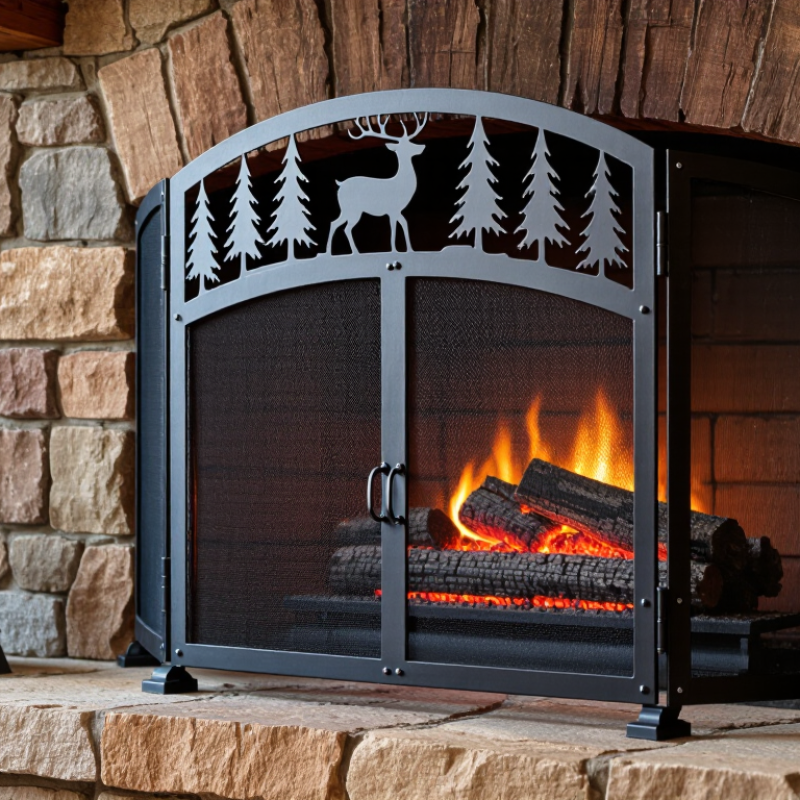
7 Tips for Buying Rustic Wildlife Fireplace Screens

Understanding Rustic Wildlife Fireplace Screen Styles

Rustic wildlife fireplace screens usually feature deer, bears, birds, or tree branches in dark metalwork. The style can feel lodge-like or quietly natural. Choose a motif that suits the room: a large stag silhouette makes a bold focal point, while fine branches look lighter beside a small hearth. Check the screen’s proportions against the fireplace opening. A beautiful design can still feel crowded.

Screen construction matters as much as decoration. A single-panel screen gives a clean, simple outline; folding panels can fit wider hearths and adjust around uneven edges. Look for tightly woven metal mesh, stable feet, and a frame that sits securely in front of the firebox. NFPA’s Home Heating Fires report found that heating equipment caused an average of 48,530 home structure fires annually from 2016 to 2020. That figure covers heating equipment broadly, not screens alone, but it underscores why fit and sturdy construction deserve attention. Small details matter.

Finish changes the mood. Blackened steel feels crisp; a weathered, bronze-toned surface looks softer against stone or brick. Compare the finish in daylight and firelight, since shiny metal can reflect more than expected. Avoid choosing by motif alone. Measure the opening, including its height and width, and check whether doors or tools need clearance. A slightly imperfect match may still work, but a screen that rocks or leaves wide gaps should prompt a rethink.

Measuring the Fireplace and Choosing the Right Fit

A rustic wildlife fireplace screen should sit securely in front of the firebox without hiding its carved details or narrowing access. Measure the opening at the top, middle, and bottom; older masonry fireplaces are not always perfectly square. Use the narrowest width when selecting a screen that fits inside the opening. For a screen that stands outside it, measure the full outer width and allow room for stable feet. Measure height from the hearth to the top edge of the opening. Small differences matter.

Check the hearth depth and floor surface, too. A screen with deep feet may wobble on a shallow hearth, while uneven stone can leave a visible gap. For active fires, confirm the screen’s intended use and follow its clearance guidance. Measure twice. I still find this step easy to rush. A paper outline of the screen’s footprint can reveal a fit problem before delivery.

Tips: Write down all measurements, including the smallest width and available depth. Keep handles and decorative branches clear of nearby trim. If the fireplace has an arched or irregular opening, sketch its shape and compare it with the screen dimensions. Don’t assume a tall screen is automatically safer; stable placement and suitable coverage matter more.

Comparing Materials, Construction, and Durability

When comparing rustic wildlife fireplace screens, look beyond the animal motif. Wrought iron and steel offer sturdy frames, but thickness and joint quality matter more than a heavy appearance. Feel the weight. Check the joints. Welds should look even, with no sharp edges or visible gaps. A mesh panel helps contain sparks while allowing heat to pass; large decorative cutouts alone may offer less protection.

A dark, textured finish can suit a cabin-style room, but inspect corners and feet for thin coating or early rust. Check the joints. Hinges should move smoothly without wobbling, and feet should sit level on the hearth. Measure the fireplace opening before buying, then compare those dimensions with the screen’s usable coverage. Wildlife details may be cast, welded, or cut into the panel; crisp edges and secure attachments tend to hold up better than delicate raised pieces. Not every rustic screen is built for daily use. That distinction is easy to miss. Choose a design intended for fireplace use, and follow its care instructions, especially when cleaning ash or touching up the finish.

7 Tips for Buying Rustic Wildlife Fireplace Screens - Comparing Materials, Construction, and Durability
Tip Material to Compare Construction Details Durability Considerations What to Check Before Buying
1. Match the screen to your fireplace opening Steel and wrought iron are common choices for sturdy fireplace screens. Look for a frame that sits securely in front of the opening without blocking access to the firebox. A properly sized screen is less likely to wobble or leave gaps where sparks can escape. Measure the opening’s width and height, then compare those measurements with the screen’s overall dimensions.
2. Choose mesh that contains sparks Fine metal mesh, often steel, provides a barrier while allowing heat to pass through. Check that the mesh is evenly attached to the frame and has no loose edges, holes, or visibly weak spots. Heat and repeated handling can stress mesh connections; sturdy attachment helps the screen retain its shape. Inspect the mesh closely and confirm that the screen is intended for use with your type of fireplace.
3. Assess the frame and joints Steel frames are generally rigid; heavier iron construction can provide a solid, substantial feel. Welded or securely fastened joints should feel firm, with no sharp edges or loose connections. Weak joints may loosen with movement, while a rigid frame is better able to withstand regular use. Check corners, hinges, feet, and handle attachments for movement, rough finishing, or uneven alignment.
4. Consider the finish and heat exposure Finished steel and iron are available in a range of dark, aged, or textured appearances. A consistent finish can help protect the underlying metal from everyday wear and surface corrosion. Finishes may discolor, chip, or wear over time, especially where the screen is frequently touched or exposed to heat. Follow the maker’s care instructions and avoid assuming that a decorative finish is suitable for direct flame contact.
5. Evaluate wildlife details for practical use Metalwork may depict animals such as deer, birds, or woodland creatures. Decorative cutouts and overlays should not compromise mesh coverage, frame stability, or safe handling. Small decorative elements can bend or loosen if they protrude or are poorly attached. Check that wildlife motifs have smooth edges and do not create large openings in the spark barrier.
6. Decide between a single-panel and folding design Both styles are commonly made with metal frames and mesh panels. Folding screens use hinges; single-panel screens rely on a stable frame or feet. Hinges add moving parts that may need occasional inspection, while a one-piece design has fewer joints. Open and close folding panels before purchase, and make sure the screen remains stable in its intended position.
7. Balance weight with ease of handling Thicker metal construction may feel more substantial, while lighter designs are easier to move. A secure handle and stable feet make it easier to reposition a screen for tending the fire. Very light screens may shift more easily; heavier screens can be harder to move safely. Consider who will handle the screen and whether its weight and handle placement suit your routine.

Evaluating Safety Features and Ease of Use

A rustic wildlife fireplace screen should feel steady before its ironwork catches your eye. Set it on the hearth and gently test for rocking; uneven stone can make even a heavy frame shift. Look for a close-fitting mesh, stable feet, and hinges that move without scraping. Check that handles stay outside the hottest area and remain easy to grasp. Small details matter.

The National Fire Protection Association reported an annual average of 44,210 home structure fires involving heating equipment from 2016 to 2020, with 480 civilian deaths and $1.1 billion in direct property damage. A screen cannot prevent every fire, but sound construction can help contain sparks. Keep nearby combustible items at least three feet from heating equipment, following NFPA guidance. Before buying, measure the fireplace opening and compare it with the screen’s usable coverage. A folding or hinged design may be easier to move for cleaning, though extra joints can loosen over time. I would not assume decorative weight means safe stability. Check the frame after use, and never handle it while hot.

7 Tips for Buying Rustic Wildlife Fireplace Screens

A checklist breakdown for evaluating safety features and ease of use.

The chart counts the checklist items in this guide, not product ratings: check stability, mesh and opening coverage, heat-suitable materials, and secure placement for safety; check fit, convenient fire access, and ease of cleaning for everyday use.

Balancing Wildlife Design, Maintenance, and Budget

A wildlife motif should suit the fireplace, not overwhelm it. Measure the opening before shopping, then compare the screen’s height and width with the firebox. A small owl or pine-tree silhouette can look crisp against dark iron; crowded details may disappear from across the room. Check that the design does not block access to doors or controls, and follow the fireplace maker’s clearance guidance. Small details matter.

Material affects both upkeep and cost. Steel with a heat-resistant finish can offer a sturdy, rustic look, but inspect joints and hinges for smooth movement. Look closely at the mesh, too: fine mesh catches ash and dust more readily, while wider openings may be easier to brush clean. Ask how the finish should be cleaned; abrasive pads can damage some coatings. Worth checking twice.

Set a budget that includes more than the purchase price. A screen that fits well and has replaceable parts may be a better value than a cheaper model that needs replacing. Compare weight, stability, return terms, and care instructions before deciding. It is tempting to pay extra for elaborate wildlife scenes, but simpler designs often show less dust. I may be giving maintenance too much weight; still, a quick wipe should not become a weekly project. Not always the cheapest.

FAQS

Which wildlife motif works best in a small room?

A small owl or fine branch pattern can feel lighter beside a compact hearth. A large stag may dominate the wall.

How should I measure for a fireplace screen?

Measure the firebox opening’s height and width. Check usable screen coverage and leave room for doors, tools, and controls.

Is a single-panel or folding screen better?

A single panel gives a clean outline. Folding panels can suit wider hearths or uneven edges.

What construction details should I inspect?

Look for tightly woven mesh, level feet, even welds, and smooth hinges. Check for sharp edges or loose decorative pieces.

Which finish suits a rustic fireplace?

Blackened steel looks crisp, while weathered bronze tones can blend with brick or stone. Check the finish in daylight and firelight.

Does finer mesh need more cleaning?

Fine mesh can catch ash and dust more readily. Wider openings may be easier to brush clean, though they can offer less coverage.

How can I tell whether a screen is stable?

Set it on the hearth and check that it sits securely without rocking. Wide gaps deserve another look.

Is an elaborate wildlife design worth paying more for?

Not always. Simple patterns may show less dust, and replaceable parts can improve long-term value. I may be overvaluing easy cleaning, but weekly scrubbing sounds tedious.

Conclusion

Choosing Rustic Wildlife Fireplace Screens involves more than finding a design that suits your room. Start by considering the style of wildlife artwork, finish, and shape, then measure the fireplace opening carefully so the screen fits securely without interfering with access to the hearth. Comparing materials and construction can help you find an option that feels sturdy and is suited to regular use.

Safety and convenience matter just as much as appearance. Look for a stable design, heat-appropriate materials, and features that make the screen easy to move when needed. Consider how much cleaning and upkeep the finish and decorative details may require, and balance those needs against your budget. By weighing fit, durability, safety, maintenance, and visual appeal together, you can choose Rustic Wildlife Fireplace Screens that complement your space while serving a practical purpose.

Ethan

Ethan

Ethan is a professional marketing specialist with a deep understanding of the company’s products, customers, and industry landscape. Through years of experience in product communication, market research, and content strategy, he has developed the ability to turn complex product information into......