
Schoolhouse Glass Pendant Lights remain popular because they balance familiar design with useful, everyday illumination. Their simple shade, often rounded or softly flared, lets light spread across a kitchen island, breakfast nook, or entryway. Clear glass feels open and airy; opal or milk glass softens the bulb’s glare. That difference is easy to notice at night, when a bare bulb can feel harsh above a table. The shape also suits more than one style, from a renovated farmhouse kitchen to a compact apartment with clean, modern finishes.
Part of the appeal is practical. A pendant can define a small area without taking up counter or floor space, and its glass shade keeps the fixture visually light. The familiar silhouette has historic roots, yet it does not have to look like a museum piece. Finish, glass tint, cord length, and bulb choice all change the effect. Small choices matter.
There are trade-offs, too. Glass shows dust and fingerprints, and delicate shades need careful cleaning. A clear shade may expose a bright bulb, so placement and bulb brightness deserve attention. Ceiling height matters as well; a low-hanging fixture can obstruct sightlines or feel crowded. Not every room needs one. Still, the popularity of these pendants makes sense: they offer a recognizable shape, focused light, and enough variation to suit many homes. Their charm is real, though sometimes the simplest-looking fixtures take the most thought to get right.
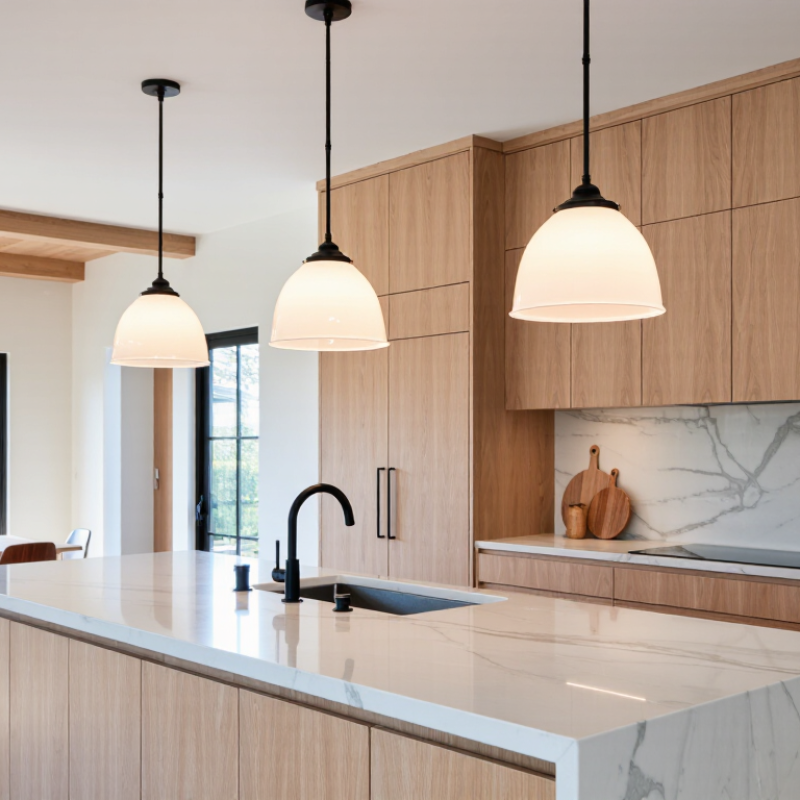
A schoolhouse glass pendant is usually recognized by its opal or milk-glass shade, rounded profile, and visible hanging stem. The shade may resemble a shallow bowl, dome, or bell. Its pale glass softens the bulb’s glare while spreading light across a table or hallway. The look recalls practical fixtures used in older schools and public buildings, though the name is not a strict technical standard.
Details vary. A simple metal fitter holds the glass, while a canopy covers the ceiling connection. Some shades direct light downward; others let a gentle glow escape through the glass sides. That glow matters. In a kitchen, it can brighten a work surface, but one pendant may leave the room’s corners dim. I learned that the hard way.
Energy performance depends more on the bulb than the shade. The U.S. Department of Energy’s Energy Saver guidance says LEDs use at least 75% less energy and last up to 25 times longer than incandescent bulbs. The International Energy Agency has estimated that lighting uses about 15% of global electricity. Those figures make efficient bulbs a practical choice, but they do not guarantee a comfortable room. Shade size, ceiling height, and placement still shape the result. A glass pendant can look right and feel slightly wrong.
| Dimension | Typical Characteristics | Why It Matters |
|---|---|---|
| Defining style | A pendant with a schoolhouse-inspired shade, commonly made of glass and suspended from a ceiling canopy by a stem, rod, or cord. | The familiar silhouette brings a traditional reference into both classic and contemporary interiors. |
| Shade shape | Common forms include rounded, bell-shaped, dome-shaped, and globe-like shades. Exact shapes vary by fixture. | The range of profiles makes it easier to choose a pendant that suits a room’s scale and character. |
| Glass and light | Many examples use opal or other light-diffusing glass; clear and colored glass versions are also available. | Diffusing glass can soften the appearance of the light source and help reduce harsh glare compared with an exposed bulb. |
| Historical association | The style draws on utilitarian lighting associated with early-20th-century schools and other public interiors. | Its practical origins give the design a sense of familiarity and understated nostalgia. |
| Visual balance | A simple glass shade is often paired with visible metal hardware and clean lines. | The combination can feel decorative without being visually elaborate, making the style easy to coordinate. |
| Versatile placement | Depending on its size and light output, a pendant may be used over a kitchen island, in an entryway, or above a dining or work surface. | Its straightforward form works in a range of rooms; the number and spacing of fixtures should suit the space and task. |
| Style compatibility | Schoolhouse pendants appear in traditional, farmhouse, vintage-inspired, and modern interiors, with finish and shade details influencing the overall look. | The design can bridge older architectural details and newer furnishings without requiring an ornate fixture. |
| What to check before choosing | Check the fixture’s dimensions, shade material, bulb and dimmer compatibility, mounting requirements, and suitability for the intended location. | These details affect fit, light quality, installation, and whether the fixture is appropriate for the room. |
Characteristics vary by design; “schoolhouse” describes a style rather than one fixed shade shape or specification.
Opal glass softens bulb glare and spreads light across a kitchen island or breakfast table. The glow feels gentler.
Clear glass reveals the bulb and creates sharper highlights. Ribbed glass adds texture and breaks up reflections. It can look busier than expected.
A broad, shallow dome feels casual, while a deeper bell shape adds visual weight. Check how each shape looks against your ceiling.
Yes. One modest pendant can mark a breakfast counter or brighten a hallway without crowding the ceiling. Keep an eye on sightlines.
Two or three can create a steady rhythm. Leave enough space between shades so they do not compete.
Compare its diameter, glass opacity, and bulb compatibility with your room. Ceiling height matters, too. Photos can mislead.
Brass, nickel, or painted metal can make the glass feel warmer or cooler. Small rim and stem details may change the overall style.
A bare bulb may feel harsh at eye level, and nearby windows can reflect in the glass. A dimmer helps, but it may not solve every reflection.
Schoolhouse Glass Pendant Lights are defined by their simple, familiar form: a glass shade suspended from the ceiling to provide focused yet welcoming illumination. Their design developed from practical fixtures used in school settings, where clear light and durable construction mattered. Over time, the straightforward shape became valued not only for function but also for its calm, timeless character.
Glass is central to the pendant’s appearance, while the shade’s shape, finish, and supporting metal details can create a range of moods, from crisp and understated to softly vintage. These fixtures suit kitchens, dining areas, hallways, and other interiors because they offer useful light without overwhelming a room. Their lasting popularity comes from this balance of practicality and style: they feel distinctive yet adaptable, complementing many types of décor and remaining appealing as tastes change.