
Explore our export-grade portfolio of CE-compliant high bay fixtures, specialized outdoor architectural sconces, and ambient commercial modules custom-engineered for global projects.
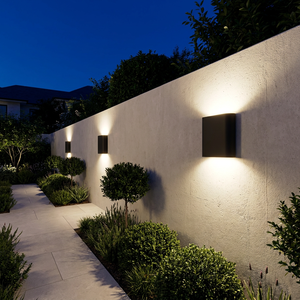
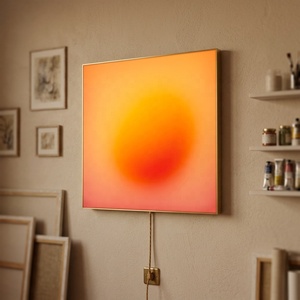
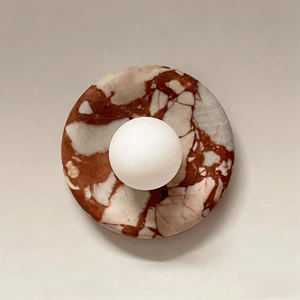
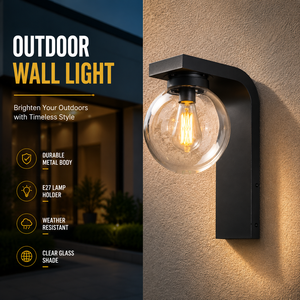
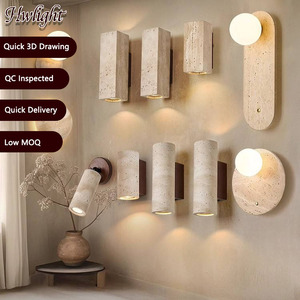
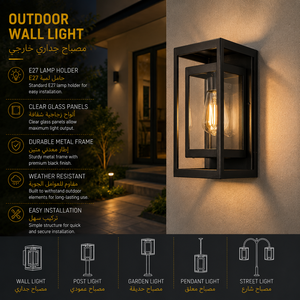
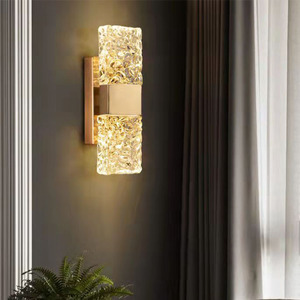
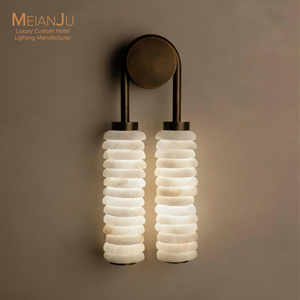
The industrial and commercial LED lighting landscape is undergoing a systemic transition. For global procurement officers, electrical engineers, and facility infrastructure specifiers, selecting a qualified CE certified high bay manufacturer and exporter extends far beyond basic lumen output comparisons. Modern industrial complexes, logistics hubs, hazardous processing facilities, and high-ceiling architectural projects demand structural reliability, harmonic distortion mitigation, precise optical control, and absolute regulatory compliance across international jurisdictions.
Information Gain Insight: Genuine CE compliance is not a static certificate—it is an integrated engineering framework encompassing the Low Voltage Directive (LVD 2014/35/EU), Electromagnetic Compatibility Directive (EMC 2014/30/EU), Restriction of Hazardous Substances (RoHS 2011/65/EU), and EcoDesign ErP Requirements (EU 2019/2020). Non-compliant high bay fixtures introduce severe operational liabilities, including grid harmonic pollution, premature driver failure due to thermal saturation, and legal export blockages at European customs checkpoints.
As a vertically integrated original equipment manufacturer (OEM) with over five decades of lighting engineering heritage, our operational philosophy centers on vertical execution: controlling die-cast metallurgy, surface chemistry, PCB layout design, thermal fluid dynamics, and optical lens molding under a unified quality management protocol. This white paper breaks down the technical imperatives of industrial high bay specification, future technology convergence, thermal management thermodynamics, and international export verification protocols.
Utilizing high-purity ADC12 die-cast aluminum heat sinks with cold-forged fins. Engineered thermal dissipation channels maintain LED junction temperatures below 75°C under continuous heavy load.
Integrating tier-one LED chips (Lumileds/Osram SMD5050/2835) yielding system efficacies up to 190 lm/W, significantly reducing overall operational kilowatt-hour expenditure.
Every industrial luminaire series undergoes comprehensive laboratory evaluation for isolation resistance, high-voltage surge protection (up to 10kV/20kV), and electromagnetic immunity.
High bay lighting historically prioritized raw power consumption over optical quality. Today, global supply chains require sustainable, intelligent, and human-centric industrial environments. When evaluating prospective industrial lighting exporters, procurement entities must analyze three core technological shifts driving market demand through 2030:
Traditional metal-halide and early generation LED high bays operated on binary binary on/off states, resulting in excessive energy waste. Next-generation CE certified high bays incorporate standardized Zhaga Book 18 or 7-pin ANSI C136.41 NEMA sockets, enabling plug-and-play integration of daylight harvesting sensors, microwave motion detectors, and mesh networking nodes (DALI-2, Zigbee 3.0, Bluetooth Mesh). Facilities utilizing autonomous dimming profiles report up to an 82% drop in auxiliary power consumption compared to unmonitored systems.
In modern automated fulfillment centers and manufacturing facilities, forklift operators and assembly technicians perform precision tasks under high vertical illuminance. Standard wide-beam UFO high bays often inflict intense direct glare (UGR > 25), leading to visual fatigue, operational errors, and safety hazards. Leading manufacturers now deploy micro-prismatic Total Internal Reflection (TIR) lenses and honeycomb anti-glare louvers, compressing UGR values below 19 without sacrificing overall lumen efficiency.
The industrial power grid is inherently unstable, prone to voltage spikes, inductive load switching, and harmonic distortion caused by heavy machinery and variable frequency drives (VFDs). High-spec exporters build high bay luminaires featuring industrial-grade programmable drivers (e.g., MeanWell, Inventronics) equipped with 10kV/20kV surge protection devices (SPD), active power factor correction (PFC > 0.97), and low Total Harmonic Distortion (THD < 10%).
To assist enterprise buyers in auditing overseas manufacturers, the following matrix contrasts standard baseline commercial lighting against engineering-grade CE certified industrial high bay systems:
| Evaluation Vector | Commercial Grade (Standard Baseline) | Industrial CE Certified (Export Grade) | Operational Impact on Facility |
|---|---|---|---|
| Luminous Efficacy | 110 - 130 lm/W | 160 - 190 lm/W | Up to 40% additional energy savings per lumen generated. |
| Thermal Management | Basic stamped aluminum plate | ADC12 Die-cast aluminum + 3D convection channels | Extends LED junction lifespans beyond 100,000 hours (L70/B10). |
| EMC / Immunity | Basic Class B compliance | EN 55015 / EN 61547 Heavy Industrial Standard | Prevents radio frequency interference (RFI) with wireless automation. |
| Driver Isolation | Non-isolated or basic driver | Class I / Class II Fully Isolated Constant Current Driver | Protects maintenance personnel from dangerous ground fault shocks. |
| Ingress Protection | IP40 - IP54 | IP65 / IP66 Waterproof + IK08 / IK10 Impact Rated | Withstands high-pressure washdowns, dust, and mechanical impacts. |
| Color Rendering (CRI) | Ra > 70 | Ra > 80 / Ra > 90 (High-Fidelity Spectrum) | Enhances color distinction in quality control and sorting zones. |
Rooted in five decades of custom engineering and specialized lighting fabrication, our manufacturing infrastructure bridges the gap between decorative craftsmanship and heavy industrial performance. By maintaining single-source control over engineering, prototyping, casting, assembly, and testing, we deliver unmatched value to international importers and contract specifiers.
Why leading architectural firms, industrial contractors, and lighting importers choose our export programs:
Our engineering team converts client specification sheets into full CAD models, ray-tracing optical simulations, and photometric IES files within 72 hours, ensuring flawless site integration.
All die-cast housing units undergo a multi-stage chromate conversion process followed by electrostatic outdoor-grade powder coating, resisting salt spray corrosion for over 1,000 hours (ASTM B117 standard).
Every production batch undergoes strict spectral distribution analysis, chromaticity coordinate checking, flicker-free testing (IEEE 1789 standard), and thermal imaging validation before packaging.
Fixtures are engineered with universal input drivers (90-305VAC or high-voltage 200-480VAC for industrial three-phase grids), enabling seamless deployment across European, North American, and Asian markets.
Targeted technical clarity addressing critical considerations in high bay luminaire sourcing and CE export compliance: