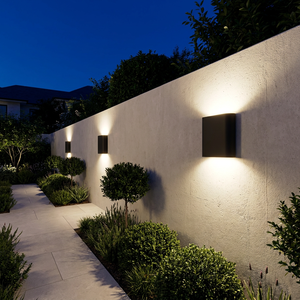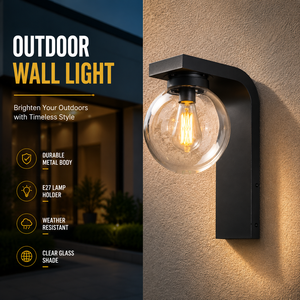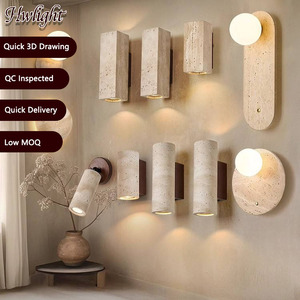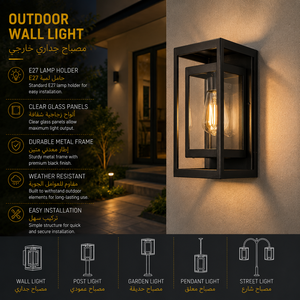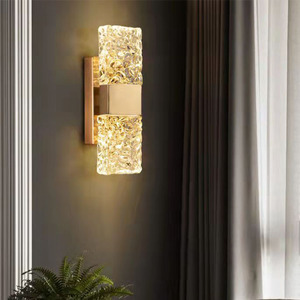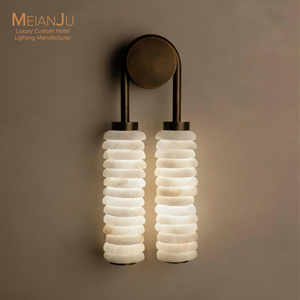
Explore our precision-engineered exterior lighting solutions. Designed for extreme environmental resistance, high lumen efficacy, and seamless integration into modern urban & architectural environments.
In the contemporary B2B global lighting market, evaluating China's best street light suppliers and exporters requires a deep technical understanding of thermal management dynamics, optical refractor efficiency, electrical surge resilience, and IoT control protocol integration. As urban infrastructures transition toward smart city ecosystems, procurement managers, municipal specifiers, and EPC contractors must look beyond surface-level aesthetic pricing to evaluate total cost of ownership (TCO) across a 15-to-20-year operational lifecycle.
Our vertically integrated manufacturing facility combines over 50 years of decorative and architectural engineering expertise with state-of-the-art aluminum die-casting, automated powder coating, surface-mount technology (SMT) LED module placement, and rigorous photometrics testing. Every luminaire, from heavy-duty highway street lights to high-end architectural outdoor sconces, is designed, engineered, assembled, and tested under one unified quality management system compliant with ISO 9001, ISO 14001, and ISO 45001 standards.
Many overseas trading firms operate via fragmented sub-contracting networks, leading to inconsistent alloy compositions, variance in anodization thickness, and unpredictable driver batch qualities. Our facility controls every manufacturing node internally:
Utilizing high-purity ADC12 low-copper aluminum alloy, our housings deliver superior structural integrity and thermal conductivity ($\approx 96\text{ W/m}\cdot\text{K}$), preventing micro-cracking and galvanic corrosion under harsh marine environments.
A multi-stage chemical conversion wash followed by AkzoNobel architectural outdoor polyester powder coating guarantees 1,000+ hours of ASTM B117 salt spray resistance without blistering or peeling.
Our optical lab utilizes high-transmittance optical grade PMMA / PC refractors and silicone gas-phase lenses, producing Type I, Type II, Type III, and Type IV light distribution patterns for optimized pole spacing.
To assist civil engineers, municipal procurement directors, and lighting specifiers in building standardized RFQs, the following technical matrix details performance benchmarks for export-ready street lighting platforms versus standard market offerings.
| Performance Parameter | Tier-1 China Exporter Standard | Standard Commodity Level | Technical / Engineering Impact |
|---|---|---|---|
| Luminous Efficacy | 160 – 180 lm/W (System Efficacy) | 110 – 130 lm/W | 35% reduction in municipal electrical energy consumption. |
| LED Chip Light Source | Lumileds 5050 / Cree XP-G3 / Bridgelux | Generic 2835 / 3528 SMD | Superior thermal tolerance and lower lumen maintenance decay ($L_{70} > 100,000\text{ hrs}$). |
| LED Driver Topology | MeanWell HLG/ELG, Inventronics EUM, Philips Xitanium | Unbranded Class II RC Drivers | High Power Factor ($>0.98$), Low THD ($<10\%$), MTBF $> 200,000\text{ hrs}$. |
| Surge Protection (SPD) | 10kV / 20kV (IEC 61643-11 Class II) | 2kV – 4kV Integral | Prevents catastrophic driver failure caused by grid transients and lightning strikes. |
| Ingress & Impact Rating | IP66 Waterproof / IK09 – IK10 Vandal Resistance | IP65 / IK07 | Ensures hermetic seal against tropical downpours, desert dust, and physical impact. |
| Color Rendering & CCT | 2700K – 6500K Selectable, Ra $\ge 70 / 80 / 90$ | Fixed CCT 6000K, Ra $< 70$ | Optimized visual clarity, reduced glare, Dark-Sky night environment compliance. |
| Smart Control Socket | 7-Pin NEMA (ANSI C136.41) / Zhaga Book 18 | None / Basic Photocell Only | Plug-and-play capability for Smart City IoT nodes (LoRaWAN, NB-IoT, DALI-2). |
The global outdoor lighting sector is undergoing a profound paradigm shift. Procurement strategies must align with global carbon neutrality mandates, smart grid infrastructure upgrades, and advanced optical physics.
Street lighting infrastructure is no longer evaluated purely as an isolated illumination system. Modern street light poles are now recognized as critical real estate for urban IoT sensor networks. Leading China suppliers are universally adopting standardized 7-pin NEMA ANSI C136.41 receptacles and Zhaga Book 18 socket connectors.
These standardized interfaces allow municipal authorities to install basic photocell control today and seamlessly upgrade to wireless Mesh networks (DALI-2, Zigbee, LoRaWAN, or Cellular NB-IoT) in the future without replacing the fixture. Integrated smart nodes enable remote dimming schedules, real-time power metering, automated fault detection, and dynamic traffic-adaptive lighting control.
Light pollution, skyglow, and excessive blue spectrum emission are driving stringent ecological legislation across Europe, North America, and Australia. Sourcing trends favor luminaires with strict BUG (Backlight, Uplight, Glare) ratings of U0 (zero uplight emission above 90 degrees).
Advanced optical design utilizes specialized silicone micro-lenses that direct light precisely onto roadway lanes with uniform illuminance (Eav) and high brightness uniformity (UI), completely eliminating wasteful light trespass into neighboring residential structures and minimizing ecological impact on nocturnal wildlife.
Modern 5CCT and dynamic spectrum street lights allow operators to shift color temperature from 4000K in early evening traffic hours down to 2200K amber warm light during low-density midnight hours, dramatically reducing glare and melatonin suppression in humans and wildlife.
Heat sink technology is shifting from conventional die-cast aluminum fins to graphene-coated composite heat sinks. Graphene's thermal conductivity coefficient ($> 3000\text{ W/m}\cdot\text{K}$) lowers junction temperatures ($T_j$) by up to $15^\circ\text{C}$, doubling component lifespan.
As off-grid utility costs escalate, solar-integrated street lighting has evolved beyond standalone decorative poles. Modern industrial hybrid street lights feature high-efficiency Monocrystalline PERC or N-Type TOPCon solar panels coupled with ultra-durable Lithium Iron Phosphate ($\text{LiFePO}_4$) battery banks and Intelligent Maximum Power Point Tracking (MPPT) charge controllers.
These systems automatically toggle between utility grid power and solar energy based on battery state-of-charge (SoC), ensuring 100% lighting availability even during extended seasonal cloud cover or grid blackouts.
The European Union's Ecodesign Directive and global ESG benchmarks are forcing a transition away from permanently sealed "throwaway" luminaires. Enterprise street light exporters now engineer toolless-entry housings featuring quick-disconnect electrical terminal blocks, field-replaceable LED engines, and modular driver trays. This circular engineering approach enables cost-effective maintenance and component upgrades directly on top of elevated bucket trucks without removing the fixture housing from the mounting arm.
To mitigate supply chain risks, guarantee compliance with international engineering standards, and protect project ROI, global importers and specifiers should execute a structured 4-stage supplier evaluation workflow prior to issuing purchase orders.
Request certified IES LM-79 photometric test reports generated by accredited third-party laboratories (TÜV SÜD, SGS, Intertek, or UL). Verify $L_{70}$ lumen maintenance projection data via LM-80 testing at $55^\circ\text{C}$, $85^\circ\text{C}$, and $105^\circ\text{C}$ casing temperatures.
Ensure the supplier conducts 100% thermal shock, environmental aging, and pressurized water jet ingress testing (IP65/IP66/IP67) on production line samples. Request high-resolution thermal imaging camera reports to verify driver and junction hot-spot management.
Verify that drivers and surge protection devices comply with IEC 61000-4-5 surge immunity requirements. Request CE, RoHS, ENEC, CB, UL, or SAA certificates matching the exact luminaire series model numbers provided on commercial invoices.
Whether you are designing a modern smart city highway lighting tender, specifying architectural sconces for luxury villa hospitality developments, or seeking a reliable direct factory partner for white-label distribution, our engineering team is ready to deliver complete photometric design, shop drawings, custom samples, and competitive factory-direct pricing.