
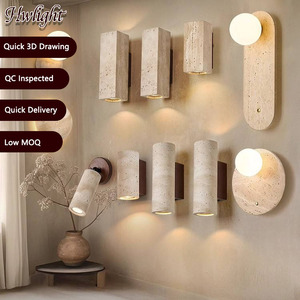
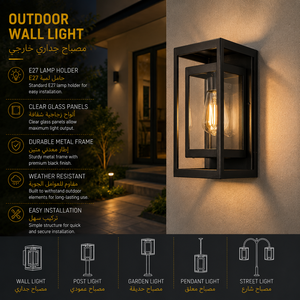
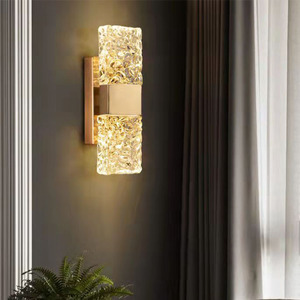
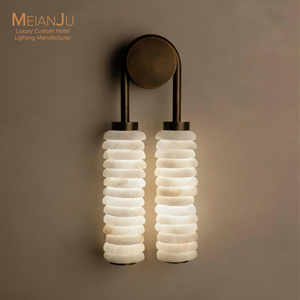
The global architectural lighting market is experiencing a profound paradigm shift. As commercial specifiers, luxury hotel operators, and real estate developers prioritize bespoke spatial experiences, China wholesale glass pendant factory manufacturing has evolved beyond simple mass assembly. Modern decorative illumination requires an exacting alignment of glass optical purity, thermal annealing, precision metallurgy, and integrated solid-state LED light engines.
Selecting a premier glass pendant supplier requires understanding the physics of glass transformation, structural load engineering, and electrical compliance. Standard off-the-shelf lighting solutions often suffer from stress fractures, chromatic dispersion, inconsistent wall thickness, and subpar heat dissipation. Top-tier Chinese lighting manufacturers operate integrated industrial plants equipped with automated glass annealing lehrs, 5-axis CNC machining, micro-copperfoil soldering suites, and photometric testing laboratories.
High-transmittance borosilicate glass offers superior thermal shock resistance ($\Delta T = 150^\circ\text{C}$), preventing structural failure under intense halogen or high-wattage COB LED thermal loads. Ideal for commercial applications demanding optical clarity without yellowing over time.
Mouth-blown and centrifugally cast glass shades pass through multi-zone temperature-controlled annealing lehrs to eliminate residual internal stresses, achieving uniform mechanical strength across complex geometric shapes.
Pendants feature custom-engineered heat sinks, high CRI (>95) driver-on-board (DOB) or remote constant-current drivers, support phase dimming, 0-10V, DALI-2, and wireless Zigbee/Casambi protocols.
Specifiers and architectural purchasing groups are insisting on lower carbon footprints. Forward-thinking Chinese factories are incorporating up to 40% post-industrial recycled glass cullet into kiln batches without sacrificing optical clarity. Energy-efficient electric melting furnaces powered by solar micro-grids are becoming standard, providing a measurable competitive edge in LEED v4.1 certified commercial projects.
Fixed correlated color temperatures (CCT) are being replaced by dynamic 5CCT selectable modules and multi-channel tunable white optics (1800K to 6500K). Premium mouth-blown glass pendants now utilize dual-diffuser inner cores to deliver flicker-free circadian rhythm lighting in modern hospitality lobbies, corporate headquarters, and high-end residential interiors.
Heavy ceiling rose mounts are giving way to sleek 24V/48V magnetic track suspension systems and ultra-slim coaxial power cables. Glass pendant designs are integrating driverless AC module technology or remote driver racks, creating minimal minimalist silhouettes where the luminaire appears suspended in mid-air.
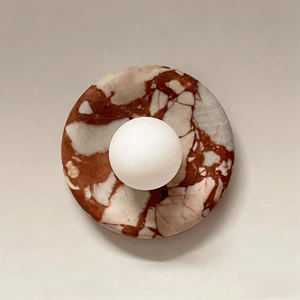
The blend of handcrafted mouth-blown glass with high-precision CNC turned metal, natural travertine, marble, and hand-patinated solid copper finishes is accelerating. Modern B2B procurement demands modularity—where a single glass globe mold can be adapted into a pendant, wall sconce, or multi-light chandelier.
Dealing with fragmented supply chains—sourcing glass shades from one vendor, metal hardware from another, and assembling via a third party—introduces quality failures, delivery delays, and mounting costs. Our integrated manufacturing model solves these challenges under one roof.
Every custom inquiry is analyzed by structural engineers. CAD submittals, photometrics (IES files), loading calculations, and electrical schematics are produced within 48 hours.
3D printed rapid prototypes lead directly to in-house aluminum and steel mold tooling. Skilled glassblowers work beside automated kilns to maintain wall thickness within $\pm0.8\text{mm}$.
From heavy die-cast aluminum to hand-forged wrought iron, spun brass, and natural copper, metal surfaces undergo multi-stage electroplating or hand-applied antique patina finishes.
Fixtures are wired and tested to UL 1598, cUL, and CE standards for dry, damp, or IP65 wet locations. Custom drop-tested wood crates guarantee zero breakage during ocean freight.
Yes. Our engineering team converts concept sketches, architectural CAD files, or reference photos into 3D models and detailed shop drawings. We detail structural weight support, thermal dissipation, LED driver housing, voltage configuration (120V to 277V), and mounting canopy details prior to physical mold fabrication.
Our complete luminaire builds comply with UL 1598, cUL, and CE-LVD safety standards. We offer custom electrical engineering configured for 120V (North America), 220-240V (EU/UK/Asia), or universal voltage dimmable drivers. All damp, dry, or IP65 outdoor ratings are backed by lab testing documentation and IES photometric files for lighting designers.
Rapid 3D prototyping and shop drawing approvals are completed within 7 to 10 working days. Custom glass mold making and sample production require 2 to 3 weeks. Full wholesale container production (FCL) or commercial project batches typically ship in 4 to 6 weeks, structured against your construction timeline.
We utilize customized, high-density molded EPE foam packaging tailored specifically to each glass shade's geometry. Outer packages feature 7-ply corrugated cartons or ISPM 15 compliant heat-treated wooden crates for heavy commercial chandeliers. Our drop-test pass rate exceeds 99.8% across ocean, air, and express parcel transit.
For standard catalog glass pendants, our baseline MOQ starts at 20 to 50 units. For fully custom commercial hotel or casino projects, we support low-volume production (even single statement lobby chandeliers) backed by custom engineering fees. Flexible tiered pricing applies for large-scale wholesale distributors.
Partner with China's leading glass pendant factory & engineering team. Submit your drawings, request material samples, or speak directly with our Senior Lighting Technical Director.
Send an Inquiry