
Explore our turnkey custom chandelier & architectural sconce manufacturing capabilities for hospitality, high-end residential, and commercial developments.
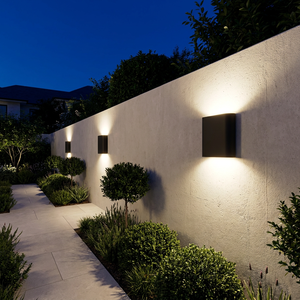
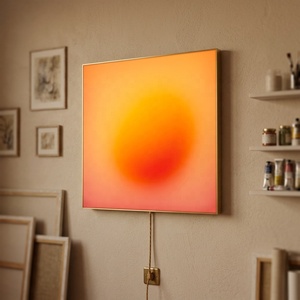
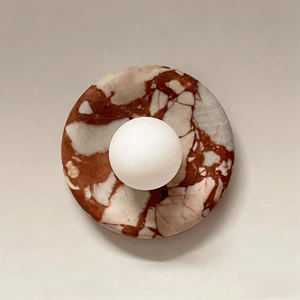
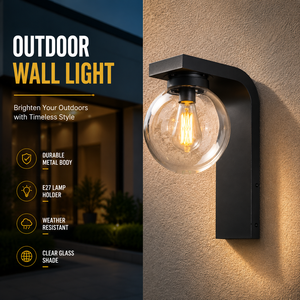
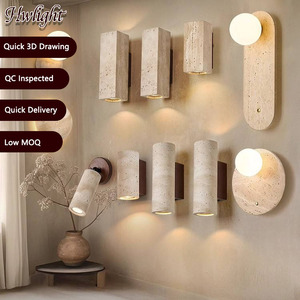
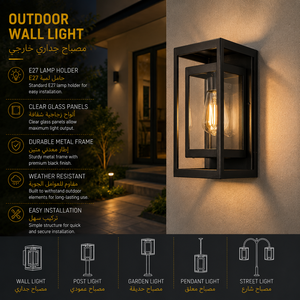
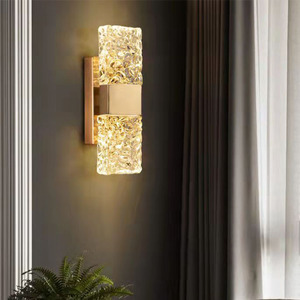
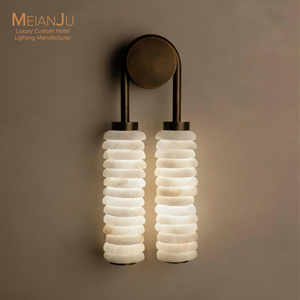
By keeping CAD drafting, metal forging, stone carving, optical calibration, and electrical certification under one roof, we eliminate supply chain fragmentation for specifiers.
Our in-house engineering team translates preliminary designer sketches, structural renders, and architectural CAD files into production-ready shop drawings. We verify structural load limits, mounting canopy points, voltage configurations, and lumen distributions before raw material cutting begins.
From precision hand-cut copperfoil stained glass and kiln-fired art glass to solid forged iron, natural Spanish alabaster, travertine stone, and heavy-gauge extruded aluminum—our workshop masters multi-material architectural chandeliers designed for multi-decade durability.
Engineered for seamless international deployment. Built strictly to UL 1598, cUL, and CE standards for dry, damp, or wet IP65 outdoor locations. Fully integrated with modern lighting control protocols, including 0-10V, Phase, DALI-2, Zigbee, and DMX architectural dimming drivers.
In high-end commercial architecture, luxury hospitality projects, and upscale residential developments, specifying luminaire packages requires far more than aesthetic selection. A custom OEM LED chandelier serves as both a primary focal sculpture and an essential element of the building’s lighting control scheme. Achieving long-term operational success demands high optical performance, robust thermal management, structural safety engineering, and compliance with strict electrical codes.
As a single-source custom decorative lighting manufacturer backed by over 50 years of fabrication heritage, our engineering framework solves the traditional disconnect between artistic design concepts and real-world installation requirements. By combining proprietary metal forging, natural stone machining, and hand-blown glass craft with state-of-the-art solid-state LED engines, we empower architects, lighting designers, and procurement groups to bring complex luminaire concepts into reality seamlessly.
Information Gain Insight: Unlike standard off-the-shelf catalog luminaires, true OEM architectural LED chandeliers require calculated thermal dissipation paths. Operating LED junction temperatures ($T_j$) must remain below 85°C within enclosed glass, alabaster, or acrylic diffusers to prevent lumen depreciation and maintain color consistency ($\Delta E < 3$ MacAdam ellipse) over 50,000+ hours.
When custom lighting programs rely on outsourced sub-assemblies—where one vendor casts the metal, another cuts the diffusers, and a third wire-assembles the component—project timelines frequently face delays, while accountability becomes fragmented. Our integrated manufacturing facility executes every stage under one roof:
The global contract decorative lighting landscape is experiencing a technological shift driven by sustainable building mandates (LEED v4.1, WELL Building Standard), smart building connectivity, and modular maintenance requirements. Specifiers and procurement agents must evaluate future-proofing factors when commissioning custom OEM production runs.
Modern luxury hospitality and wellness-oriented workplace environments demand dynamically adaptive light environments. Custom OEM chandeliers are increasingly specified with multi-channel LED engines that transition smoothly from 1800K (warm candle flame tone) to 4000K (cool daytime clarity) while following natural circadian curves. OEM drivers must maintain flicker-free dimming down to 0.1% across IEEE 1789-2015 recommended comfort zones.
As carbon footprint assessments become standard in corporate real estate procurement, luminaire specifications are shifting toward natural, circular, or low-embodied-carbon materials. We are observing a significant increase in custom orders featuring natural Spanish alabaster, quarried travertine stone, recycled glass solids, and sustainably sourced copper alloys—all housing fully replaceable LED board modules to avoid disposable fixture waste.
Hardwired 0-10V control lines are increasingly giving way to integrated wireless mesh nodes embedded directly within chandelier canopy structures. Utilizing protocols such as Bluetooth Mesh, Zigbee 3.0, and Matter, multi-tiered venue chandeliers can be commissioned remotely, partitioned into independent lighting scenes, and monitored for power consumption metrics without pulling extra control wiring through high ceiling plaster lines.
A major failure mode of commercial custom chandeliers historically involved hard-potted internal components that required complete fixture dismantling to service a failed driver. Modern OEM procurement specifications mandate modular driver enclosures located within accessible ceiling junction canopies or remote driver boxes up to 100 feet away, ensuring zero downtime for high-ceiling hotel lobbies or banquet halls.
Comprehensive overview of custom manufacturing options, electrical parameters, and material selections for project specifiers.
| Parameter | Standard Specification Options | Custom OEM / ODM Capability |
|---|---|---|
| Core Materials | Brass, Solid Copper, Die-Cast Aluminum, Wrought Iron | Natural Alabaster, Travertine, Resin, Hand-Blown Glass, Acrylic |
| Color Temperature (CCT) | 2700K, 3000K, 4000K, 5000K | 5CCT Switchable, Tunable White (1800K - 4000K), Dim-to-Warm |
| Color Rendering Index (CRI) | CRI > 80Ra, CRI > 90Ra | Ultra-High CRI 98Ra (R9 > 90, TM-30 Rf > 95, Rg > 100) |
| Ingress Protection (IP) | IP20 (Indoor / Dry Locations) | IP44 Damp Location, IP65 Waterproof Outdoor Architectural |
| Dimming & Control Drivers | TRIAC / Phase Dimming, 0-10V Dimmable | DALI-2 (DT8 Tunable White), DMX512, Bluetooth Mesh, Zigbee 3.0 |
| Operating Voltage | 120V AC (North America) / 220-240V AC (EU/UK/Asia) | Universal 100-277V AC Input, Low-Voltage 24V DC Remote Driver Systems |
| Certifications & Testing | UL, cUL Listed (Standard 1598) | CE, RoHS, Title 24 JA8 Compliant, Wet Location Certification, IES Photometrics |
| Surface Finishes | Brushed Brass, Matte Black, Satin Nickel | Hand-applied Antiqued Patina, Electroplated Gold, Salt-Spray Powder Coat |
Transitioning high-output decorative lighting to LED light sources introduced specific engineering challenges. Traditional incandescent lamps radiated heat outward through infrared light, whereas high-power LED arrays concentrate thermal energy back into the substrate ($T_j$). If left unmanaged inside dense decorative diffusers—such as thick hand-blown glass shades or natural stone enclosures—heat buildup causes rapid color shift, phosphor degradation, and driver lifetime reduction.
Our OEM design process incorporates passive thermal management solutions custom-contoured to fit within invisible internal void spaces of the luminaire design:
Glare control remains a primary requirement in high-end hospitality lighting. Raw LED point sources generate high micro-brightness that causes visual discomfort. We resolve this by pairing custom LED arrays with precision-engineered optical diffusion materials:
Essential guidance for architects, lighting designers, distributors, and general contractors planning custom OEM lighting programs.
Yes. Our in-house engineering team routinely converts concept sketches, rendering images, hand drafts, or detailed 2D/3D CAD files into complete submittal packages. We produce fully dimensioned shop drawings detailing structural support points, total fixture weight, electrical load, voltage options, driver mounting, and field assembly instructions prior to raw material cutting.
Absolutely. Every custom luminaire is engineered to meet global compliance criteria. We offer UL and cUL listing for North American dry, damp, and wet location standards (UL 1598 / 1598A), as well as CE compliance for European and Middle Eastern markets. Drivers can be specified for universal input voltages (100-277V, 50/60Hz) or specialized low-voltage DC bus systems.
Because design engineering, CNC metal processing, stone carving, hand finishing, and electrical testing occur under one roof, our lead times are highly controlled. Prototype shop drawings are typically turned around in 3–5 business days. Sample fabrication takes approximately 2–3 weeks, while full commercial project production runs generally range from 4 to 6 weeks, synchronized to your construction milestones.
We integrate virtually all commercial and residential architectural control protocols. This includes standard 0-10V, TRIAC/ELV phase dimming, DALI-2 (including DT8 for Tunable White color control), DMX512 for dynamic color scene changing, and wireless smart mesh controls (Bluetooth Mesh, Zigbee 3.0, Matter, or Casambi embedded modules).
Every custom fixture undergoes rigorous quality assurance steps before crating. This includes 100% full electrical Hi-Pot safety insulation testing, a minimum 24-hour continuous burn-in test to verify thermal equilibrium, surface finish adhesion checks, complete trial structural pre-assembly in factory, and photometric verification (generating IES data files upon request).
We cater to both large-scale commercial contracts and low-volume bespoke architectural statements. For custom feature lobby chandeliers or single statement luminaires for luxury residences, the MOQ is 1 unit. For customized hotel room sconce or corridor wall light programs, batch MOQ structures are available to maximize cost efficiency.
Submit your design specifications, floor plans, or mood boards today. Our senior engineering team will evaluate your project, generate detailed submittal drawings, and deliver competitive B2B factory-direct pricing.