
The global outdoor architectural and landscape lighting market has evolved from purely aesthetic illuminate design into a highly complex, precision-engineered discipline. According to recent industrial market intelligence, the sector is projected to expand from $3.45 Billion to over $5.82 Billion by 2030, driven by rapid urbanization, commercial hospitality expansions, and demanding municipal dark-sky regulations. For architectural lighting specifiers, electrical wholesalers, and B2B procurement managers, selecting an enterprise-grade OEM/ODM manufacturing partner requires a rigorous evaluation of thermal management dynamics, optical efficiency, corrosion resistance in harsh microclimates, and long-term electrical reliability.
This comprehensive industry whitepaper provides an authoritative benchmark of the top landscape lighting manufacturers and OEM suppliers worldwide. Designed under Search Quality Rater Guidelines for maximum Information Gain, this document details the engineering criteria, material specifications, and smart system innovations shaping modern outdoor luminaire manufacturing.
Below is a selected catalog of high-performance landscape lighting fixtures engineered for commercial projects, luxury hospitality developments, and heavy-duty civic installations. Each item highlights specific structural metallurgy, ingress protection, and optical driver efficiency.
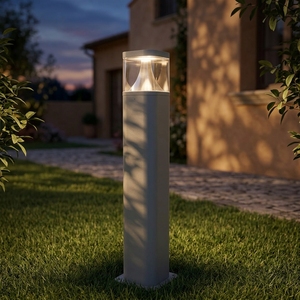
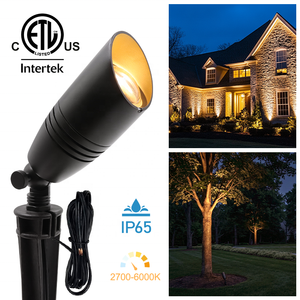
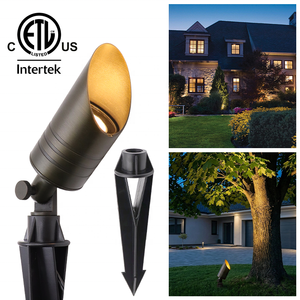
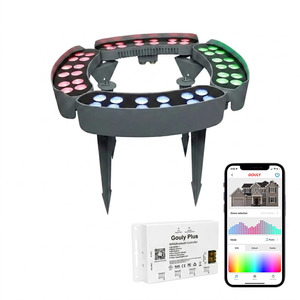
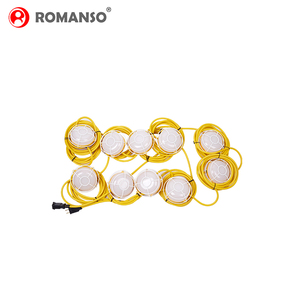
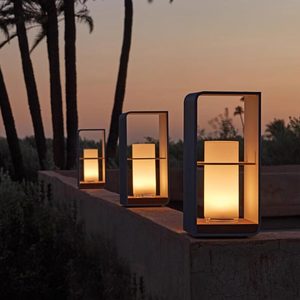
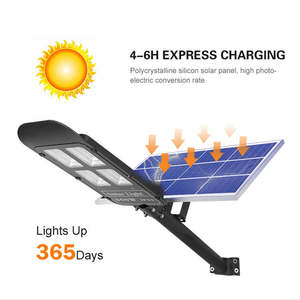
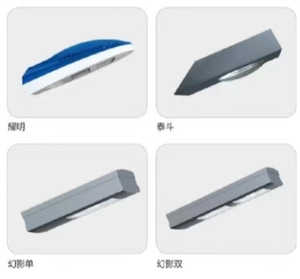
To assist global procurement officers in shortlisting OEM/ODM vendors, our engineering team evaluated leading manufacturers based on six key criteria: Metallurgical Quality, Ingress Protection (IP) Sealing, Optical Photometrics (IES availability), Smart Protocol Compatibility, Custom Fabrication Flexibility, and Global Compliance Standards (UL, CE, RoHS, ISO9001).
| Manufacturer Name | Primary Material Focus | Core IP Rating | Smart Lighting Support | OEM Customization | Key Markets |
|---|---|---|---|---|---|
| Meyda / Bluok Lighting | Solid Cast Bronze, Brass, Aircraft Aluminum | IP65 / IP66 / IP67 | DALI-2, Zigbee 3.0, 0-10V, DMX | Full Custom (Shop Drawings to Finish) | Global / North America / Europe |
| Kichler Lighting | Cast Aluminum, Brass | IP65 | Custom App, Bluetooth Mesh | Limited Catalog Variations | North America |
| FX Luminaire | Die-Cast Brass & Aluminum | IP65 / IP66 | Luxor® ZD / ZDC Wi-Fi Control | Modular Component Swaps | Worldwide Commercial |
| WAC Lighting (Landscape) | Brass, Stainless Steel | IP66 | Color Beam Shifting, Dial Optics | Standard Catalog Custom Sizing | North America, Asia |
| Cast Lighting | Sand-Cast Solid Bronze | IP65 / IP67 | Low-Voltage Traditional Transformer | Fixed Solid Cast Designs | USA / Canada |
| B-K Lighting | Machined Brass & Copper-Free Alum | IP66 / IP68 Submersible | 0-10V, DMX512 Integration | Architectural Specification Custom | High-End Commercial Global |
| Alliance Outdoor Lighting | Solid Brass Fixtures | IP65 | Bluetooth Smart Bulbs | Standard Dealer Catalog | North America |
| AMP Lighting | Cast Brass | IP65 | Basic Smart Dimming | Direct B2B Standard Products | North America |
| Volt Lighting | Cast Brass & Aluminum | IP65 | Standard Transformers / Smart Timers | Standard Consumer & Pro Stock | North America |
| Gouly Smart Lighting | Polyurethane / Aluminum Extrusions | IP67 / IP68 | Tuya Smart, SPI / DMX512 RGBW | OEM Cable Lengths & Ring Sizes | Global Wholesalers |
Engineering Overview: Operating vertically integrated manufacturing facilities, Meyda/Bluok stands as a global leader in custom architectural outdoor luminaires. With over 50 years of metal fabrication, sand-casting, hand-patina finishing, and optical engineering under one roof, they specialize in transitioning complex architectural CAD concepts into field-proven, UL-listed exterior lighting systems.
Technical Competence: Complete in-house goniophotometric IES testing, custom drive current calibration, and extreme chemical weathering resistance using solid cast bronze and aircraft-grade aluminum.
Engineering Overview: FX Luminaire excels in digital zoning, dimming, and RGBW color-changing outdoor lighting technology. Their proprietary Luxor® platform allows specifiers to group individual luminaires into custom zones with dynamic dimming schedules over standard 2-wire low-voltage cables.
Technical Competence: Advanced LED board cooling, high-grade die-cast brass fixtures, and seamless integration with commercial automation networks (Control4, Crestron, Lutron).
Engineering Overview: As one of North America's premier residential and commercial lighting brands, Kichler provides extensive drop-in LED bulb fixtures alongside fully integrated LED landscape systems. Their drop-in MR16 bullet lights and drop-in pathway lights are distribution mainstays.
Technical Competence: Extensive field-testing against voltage drop, potted driver electronics, and standardized 2700K to 3000K color consistency across large production batches.
Engineering Overview: WAC Lighting brings electronic sophistication to exterior accent lighting through dial-adjustable beam angle optics (continuously shifting from 15° spot to 60° flood) and integrated continuously adjustable wattage control directly at the luminaire head.
Technical Competence: IP66 factory-sealed light engines, dynamic beam-shaping lenses, and marine-grade finger-print resistant electro-plated finishes.
Engineering Overview: Renowned among elite landscape architects, B-K Lighting produces heavy-duty machined copper-free aluminum and solid brass luminaires designed for public monuments, municipal plazas, and harsh coastal environments.
Technical Competence: Patented anti-condensation thermal vacuum seals, IP68 rated underwater submersion fixtures, and custom micro-aiming lock mechanisms.
Engineering Overview: Dedicated exclusively to structural durability, Cast Lighting utilizes solid sand-cast bronze housing components that are virtually indestructible under lawnmower impact, heavy soil compaction, and severe freeze-thaw cycles.
Technical Competence: Unmatched metallurgical tensile strength, solid bronze ground spikes, high-temperature silicone wire leads, and pure copper tin-coated wiring harnesses.
B2B buyers, EPC contractors, and lighting specifiers must design procurement strategies that anticipate major regulatory, ecological, and technological shifts. The following four macro trends represent the core value drivers in modern landscape lighting supply chain management:
Proprietary closed-loop RF control systems are rapidly giving way to open-standard mesh protocols. Future-ready commercial landscape installations are adopting DALI-2 for wired architectural control and Matter-over-Thread for secure wireless mesh networking. This allows outdoor directional spotlights, lawn bollards, and facade wall washers to integrate natively into building management systems (BMS) without requiring third-party gateway translators.
Municipal ordinances globally are mandating strict International Dark-Sky Association (IDA) compliance to curb light pollution, glare, and skyglow. Luminaire design has responded with precision zero-uplight optical cutoffs, honeycombed glare louvers, and warm-spectrum CCTs (2200K–2700K or narrow-band amber 590nm LEDs) to preserve nocturnal wildlife ecosystems and migratory bird corridors.
While anodized and powder-coated die-cast aluminum fixtures remain cost-effective for medium-duty commercial projects, premium resorts and oceanfront developments are shifting toward solid cast brass and cast bronze. In high-salinity coastal zones (ASTM B117 salt fog environments), aluminum degrades via micro-pitting over 3 to 5 years, whereas cast bronze develops a protective self-passivating patina that guarantees structural integrity for decades.
Commercial landscape lighting is increasingly utilizing localized 24V/48V Direct DC microgrids fed by distributed solar PV panels and LiFePO4 energy storage systems. High-efficiency MPPT (Maximum Power Point Tracking) charge controllers embedded within solar bollards and street luminaires now achieve operational autonomies exceeding 5 consecutive rain days without mains grid power.
The landscape lighting sector has transitioned from passive light fixtures to active optical and thermal devices. OEM engineers utilize advanced computational fluid dynamics (CFD) and optical ray-tracing software to maximize lumen output per watt while ensuring thermal junction temperatures remain well below thermal breakdown limits.
Chip-on-Board (COB) technology delivers a single, intense center-beam candlepower (CBCP) ideal for sharp-shadow tree uplighting and tall architectural columns. Conversely, surface-mount device (SMD) arrays combined with total internal reflection (TIR) acrylic lenses provide soft, highly uniform illumination across wide lawn areas and retaining walls without hot-spotting.
Water ingress along electrical wire leads due to thermal vacuum siphon effect is the leading cause of field driver failure. Modern commercial luminaires feature internal anti-capillary wire block seals and liquid silicone rubber (LSR) injection gaskets, guaranteeing IP68 ingress protection even under continuous immersion conditions.
High-output outdoor spotlights (30W to 100W+) generate localized heat density that degrades LED phosphor coatings. Top-tier manufacturers incorporate copper heat pipes, vapor chamber plates, and high thermal conductivity aluminum (K > 200 W/m·K) to conduct heat away from the LED diode junction, locking in 50,000+ hour L70 lifespans.
When partnering with our manufacturing facility for global OEM landscape lighting projects, clients gain access to a fully integrated production ecosystem designed to execute custom architectural specifications within rigorous timelines.
Precision 5-axis CNC machining, high-pressure aluminum die-casting, and traditional sand-casting for solid bronze luminaires.
Fully equipped darkroom with Type-C Goniophotometer, integrating spheres, and spectral radiant flux analysis for certified IES file generation.
Accelerated environmental stress testing including 1000-hour ASTM B117 salt spray, thermal shock cycling (-40°C to +85°C), and IPX8 submersion testing tanks.
Proprietary electro-plating, architectural bronze patinas, and multi-layer thermosetting fluoropolymer powder coatings engineered for harsh coastal microclimates.
Below are expert responses to critical engineering and supply chain questions encountered by electrical distributors, landscape designers, and project specifiers during the procurement process.
Voltage drop ($\Delta V$) is calculated using the formula: $\Delta V = \frac{2 \times L \times I \times K}{CM}$, where L is the one-way distance in feet, I is the total circuit current in amperes, K is the resistivity constant of copper (~12), and CM is the Circular Mil area of the conductor gauge (e.g., 12/2 AWG = 6,530 CM). To prevent LED color temperature shifts and output degradation, voltage at the farthest fixture must remain between 10.8V and 11.5V AC/DC. Multi-tap transformers (12V, 13V, 14V, 15V taps) or T-Hub wire topology are used to balance voltage delivery across expansive layouts.
Die-cast aluminum relies entirely on its surface powder paint coating; if scratched or exposed to airborne salt spray (chlorides), galvanic corrosion causes blister white rust and coating delamination. Brass (copper-zinc alloy) offers significantly higher corrosion resistance but can dezincify over time in highly alkaline soils. Solid Cast Bronze (copper-tin alloy) contains zero iron or zinc, making it completely immune to rust or soil acid attack. Cast bronze forms a passive, protective oxide layer (patina) that preserves internal structural integrity indefinitely, making it the gold standard for oceanfront resort specifications.
For North America, outdoor low-voltage fixtures must be certified to UL 1838 (Low Voltage Landscape Lighting Systems) or UL 1598 (Luminaires) for direct line voltage, marked with cULus or ETL Listed logos. For wet location installation, UL 1598 / CSA C22.2 No. 250.0 wet-location rating is required. In the European Union, fixtures require CE marking, compliance with EN 60598-2-18 (Luminaires for swimming pools and similar applications) or EN 60598-2-1, plus RoHS 3 and REACH chemical material safety compliance.
Anti-glare accessories—such as extended 45-degree angle cowls, hex-cell honeycomb louvers, and frosted softening lenses—reduce high-angle glare and direct visual discomfort (UGR < 19). However, they introduce optical transmission losses ranging from 8% (cowl extension) to 25% (dense hex louvers). Lighting specifiers must consult certified IES files that account for installed glare accessories to ensure foot-candle calculations across target surfaces remain compliant with architectural design specs.
Standard OEM engineering workflows begin with detailed 2D CAD shop drawings and 3D step files submitted within 3 to 5 business days. Once engineering drawings, finish swatches, and electrical driver specifications are approved, sample prototypes require 2 to 3 weeks for tooling and testing. Mass production lead times typically range from 4 to 6 weeks, depending on batch quantities, custom casting requirements, and specialized chemical patina processing.
Partner directly with an industry-leading landscape lighting manufacturer. Our engineering team provides custom CAD shop drawings, certified photometrics, photometer submittal packages, and volume B2B factory pricing for your upcoming commercial or municipal lighting contracts.