
Explore our export-ready collection of architectural sconces, pendant lights, and ambient luminaires manufactured under strict UL, cUL, and CE compliance standards for commercial and residential developments.
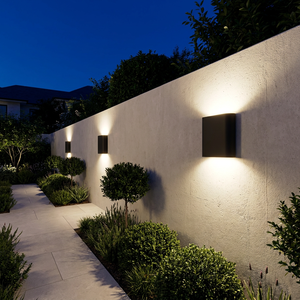
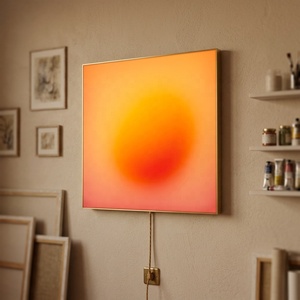
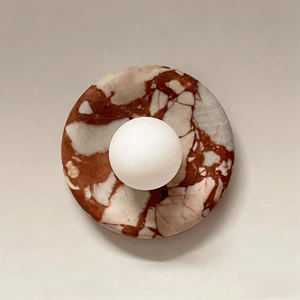
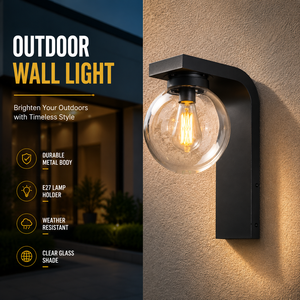
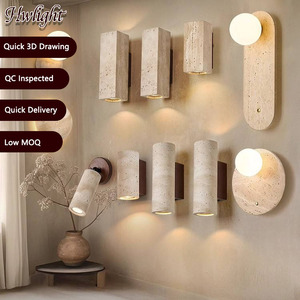
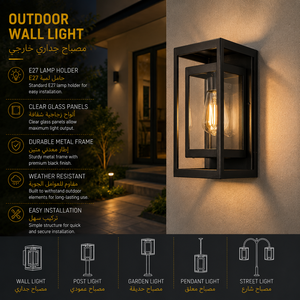
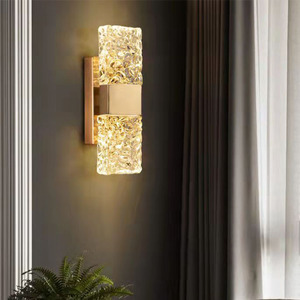
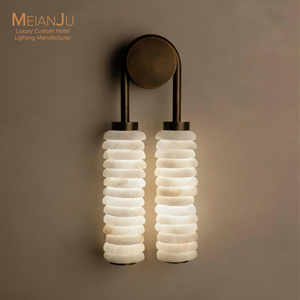
In the contemporary landscape of international architectural specification and B2B commercial procurement, sourcing decorative pendant lights, custom chandeliers, and contract wall sconces demands rigorous technical evaluation. Commercial buyers, hospitality purchasing groups, lighting designers, and importers face significant supply chain vulnerabilities when working with fragmented supply networks. Selecting a premier manufacturing partner requires assessing vertical integration, engineering capability, photometrics validation, material authenticity, and international safety compliance under standard guidelines such as UL 1598, cUL, CE, and RoHS directives.
A true tier-one pendant light factory does not merely function as an assembly line; it operates as an integrated engineering partner capable of converting CAD elevations and hand sketches into fully structural, photometrically optimized luminaires. Whether fabricating hand-soldered copperfoil stained glass, hand-forged wrought iron, or precision CNC-machined aluminum housings, top-tier exporters manage casting, metal fabrication, glass work, surface finishing, wiring, and photometric testing under one centralized facility.
Core Procurement Insight: Sourcing directly from vertically integrated manufacturers reduces project lead-time volatility by up to 40% and eliminates component mismatch risks across multi-phase hospitality, casino, and commercial developments.
Understanding the operational boundaries between original equipment manufacturing (OEM), original design manufacturing (ODM), and fully custom contract lighting engineering is critical for procurement managers seeking optimized yield, structural reliability, and cost-efficiency.
| Evaluation Parameter | Standard OEM Manufacturing | Catalog ODM Exporting | Vertically Integrated Custom OEM/ODM |
|---|---|---|---|
| Design Input & Engineering | Strict client CAD/BIM drawings | Off-the-shelf catalog specs | Concept sketch to engineered shop drawings with weight/load calculations |
| Material Versatility | Limited to specified metal/plastic | Fixed factory stock materials | Brass, Copper, Spanish Alabaster, Fused Glass, Travertine, Natural Marble |
| Electrical Compliance | Standard single-region wiring | Regional standard drivers | Global Dual-Voltage (120V & 220–240V), DALI-2, 0-10V, Phase Dimming, Title 24 |
| Lead Time Predictability | Dependent on component vendors | Fast stock shipment (2-4 weeks) | Internally controlled milestones; matched to construction project timelines |
| Quality Assurance & Photometrics | Basic high-pot testing | Standard factory batch testing | In-house LM-79, LM-80, IES photometric files, IP65 water-submersion, Salt-spray test |
To assist global procurement directors, architects, and distributor networks in vetting prospective suppliers, our senior engineering team has established ten key operational metrics. Exporters meeting these benchmarks consistently deliver superior luminous efficacy, structural longevity, and aesthetic excellence.
In-house metal stamping, spinning, CNC milling, hand-soldering, kiln glass casting, and multi-step electro-plating prevent cross-vendor quality breakdown.
Advanced thermal heat-sinking using extruded die-cast ADC12 aluminum ensures LED chip junction temperatures remain below critical thresholds, maintaining LM-80 lifespan (>50,000 hours).
Precision silicone gaskets, waterproof potted drivers, and anti-condensation breathers provide true IP65 to IP67 sealing for exterior sconces and wet-location pendants.
Direct ownership of tooling, raw brass/copper inventory, and internal powder-coating lines reduces production cycles to predictable schedules tailored to contract deadlines.
Complete documentation packages including UL, cUL, CE, RoHS, CB, and SAA compliance ensure zero customs holds or jobsite inspection failures.
Utilization of solid natural stones (Travertine, Marble, Spanish Alabaster), virgin acrylic, and real copper foil guarantees true tactile luxury and structural weight integrity.
The global lighting industry is undergoing a paradigm shift driven by technological convergence, biophilic interior architecture, and stringent energy efficiency mandates. Commercial purchasing officers and specifiers must anticipate these key trends when selecting manufacturing partners for long-term project viability.
Modern interior environments demand dynamic lighting solutions that align with human circadian rhythms. Advanced pendant lights and wall sconces are increasingly integrating 5CCT DIP-switch mechanisms (allowing contractors to toggle between 2700K, 3000K, 3500K, 4000K, and 5000K onsite) or dual-channel tunable white LED engines controlled via DALI-2 protocols. This flexibility drastically reduces SKU holding costs for distributors while guaranteeing ideal color rendering (CRI Ra ≥ 95, R9 ≥ 80) across varying architectural spaces.
Substitutions of synthetic plastics with natural minerals have accelerated dramatically in upscale residential and luxury hospitality projects. Natural Spanish alabaster diffusers offer unique vein patterns and translucent light diffusion, while porous Wabi-Sabi travertine stone and hand-blown glass elements provide grounding tactile surfaces. Top factories are investing heavily in five-axis CNC stone-carving machinery and glass annealing kilns to mass-produce raw material components with repeatable precision.
With global green building regulations (LEED v4.1, BREEAM, WELL Building Standard) taking precedence, exporters must demonstrate sustainable manufacturing practices. Leading factories are shifting toward closed-loop electroplating systems, solvent-free electrostatic powder coating, fully recyclable ADC12 aluminum alloys, and modular LED driver assemblies that allow field replacement rather than complete fixture disposal.
To provide deep insight into our single-roof manufacturing excellence, the following workflow details how raw architectural concepts are fabricated, tested, and packaged for worldwide logistics distribution:
Step 1: Engineering & Detailed Shop Drawing Generation
Upon receipt of client architectural specifications, CAD elevations, or visual concept boards, our in-house engineering team converts ideas into fully dimensioned shop drawings. These drawings specify exact structural load calculations, canopy mounting hardware, electrical wattage distribution, driver placement, and photometrics.
Step 2: Precision Metalworking & Glass Crafting
Utilizing laser cutters, CNC lathes, and traditional hand-forge stations, high-grade brass, copper, and structural steel are shaped into intricate frames. Glass sheets are hand-cut, copper-foiled, or kiln-fused to create custom shades and geometric diffusers with exceptional optical clarity.
Step 3: Surface Treatment & Proprietary Patina Application
Metal frames undergo multi-stage cleaning, ultrasonic degreasing, and chemical pretreatment before receiving electro-plated finishes (such as PVD gold or antique bronze) or electrostatic powder coating. Decades of proprietary patina formulas are applied by trained artisans to create durable, corrosion-resistant surface finishes tested to endure 168-hour salt spray exposure (ASTM B117 standard).
Step 4: Electrical Assembly, Testing & Export Logistics
Every luminaire is wired with high-temperature silicone lead wires, integrated with top-tier LED chips (Bridgelux, Cree, Lumileds) and dimmable drivers (Mean Well, Tridonic, HEP). 100% of finished production undergoes high-pot voltage isolation testing, grounding continuity checks, and 4-hour burn-in testing before being packed into custom-molded foam export crates.
Direct answers from our senior engineering and export logistics team regarding custom manufacturing, compliance, lead times, and global shipping.
Yes. Our in-house engineering department regularly translates architectural concept sketches, 3D models, or PDF elevations into fully dimensioned shop drawings. We specify mounting details, total fixture weight, voltage configurations, and photometrics for client approval prior to production release.
Absolutely. All luminaires can be engineered and built to meet UL, cUL, CE, and RoHS standards for dry, damp, or wet (IP65/IP67) locations as required. We support both 120V (North America) and 220–240V (EU/UK/Asia/ME) electrical grids, providing complete compliance documentation, cut sheets, and photometric IES files for your submittal package.
Standard made-to-order catalog items generally ship within 3 to 4 weeks. Complex architectural custom lighting programs for hotel lobbies, commercial buildings, or residential developments are scheduled strictly against your construction milestones, with production phases typically ranging between 5 to 7 weeks after final shop drawing sign-off.
We utilize custom drop-tested packaging engineered specifically for international export. Fragile alabaster, natural stone, and glass components are enclosed in high-density drop-in polyurethane foam packaging, reinforced with outer double-wall corrugated cartons or ISPM-15 compliant heat-treated wooden crates for heavy architectural chandeliers.
Because we operate fully integrated manufacturing facilities under one roof, we offer flexible MOQ structures. While catalog B2B shipments benefit from tiered wholesale volume pricing, we fully support single-piece bespoke prototype creation and low-volume custom orders for boutique hospitality and commercial contract projects.
Whether you are scaling a multi-property hotel development, matching historic architectural metalwork, or seeking a reliable OEM factory partner for custom pendant lights, our technical sales engineers are ready to support your project.