
Direct OEM manufacturing with fully customizable optical, thermal, and mechanical parameters for project specifiers across Germany.
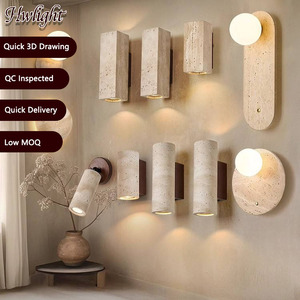
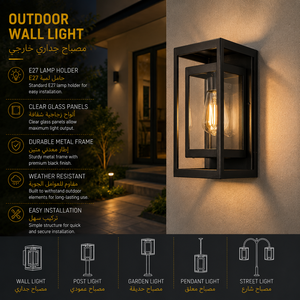
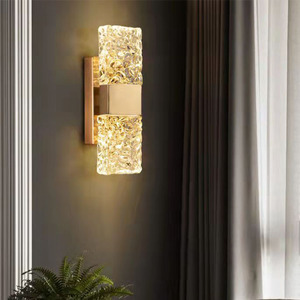
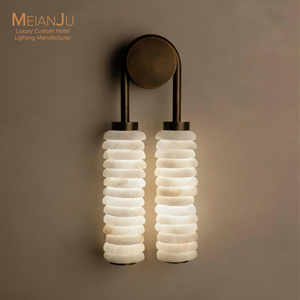
As Germany advances its industrial transformation under Industry 4.0 and stringent energy conservation laws (such as the Gebäudeenergiegesetz - GEG), the demands placed on industrial high bay facilities, warehousing logistics centers, and architectural production spaces have evolved significantly. Industrial lighting is no longer treated merely as a passive utility; it is a critical component of operational efficiency, workplace safety, carbon neutrality targets, and ergonomic compliance.
This technical whitepaper examines the engineering parameters, regulatory frameworks, localized application scenarios, and manufacturing capabilities required of global lighting suppliers servicing enterprise clients, electrical contractors, and lighting specifiers throughout the Federal Republic of Germany.
Supplying high bay luminaires and architectural lighting fixtures to the German market requires strict adherence to European Union directives and German national standards (DIN). Enterprise buyers in Germany prioritize technical validation, standardized testing metrics, and documented performance verification over unverified marketing claims.
Specifies the light requirements for indoor workplaces. For heavy industrial manufacturing and high-bay logistics, maintained illuminance ($E_m$) must meet designated thresholds (e.g., 300 to 500 lx) with strict glare control ($UGR \le 22$ or $UGR \le 19$).
Under the German Building Energy Act (Gebäudeenergiegesetz), luminaires must demonstrate ultra-high luminous efficacy ($\ge 140\text{--}160\text{ lm/W}$) to assist enterprise facilities in achieving energy audit targets (ISO 50001).
All driver circuits, thermal isolation chambers, and optical assemblies are engineered to meet ENEC, CE, and VDE electrical safety guidelines, ensuring zero electromagnetic interference (EMC) in precision automated plants.
Germany’s industrial geography is diverse, characterized by specialized economic clusters. Our OEM/ODM manufacturing capability directly addresses the distinct environmental and operational challenges found within these regional hubs:
German facility managers and electrical planners prioritize sustainable, future-proof infrastructure investments. High bay and industrial lighting suppliers must align with four main technological vectors:
Standardized Zhaga Book 18 sockets paired with DALI-2 protocols allow seamless retrofitting of motion sensors, daylight harvesting nodes, and IoT mesh networks without rewiring the high bay canopy.
Aligned with EU Ecodesign Directive (SLR/ELR), our luminaires feature modular LED engines and quick-disconnect driver gear trays, permitting localized maintenance and component replacement without disposing of the fixture chassis.
Utilizing high-purity ADC12 die-cast aluminum heat sinks with passive chimney-effect convection channels. This maintains junction temperatures ($T_j < 75^\circ\text{C}$), guaranteeing L80B10 operational lifespans exceeding 100,000 hours.
With over 50 years of combined engineering heritage, our single-source manufacturing plant bridges custom architectural craftsmanship with high-capacity industrial high bay production. By consolidating sheet metal fabrication, precision CNC machining, powder coating, optical lens molding, and electrical assembly under one roof, we guarantee complete control over lead times and product quality.
Before leaving the factory, every batch destined for German delivery undergoes comprehensive photometric analysis (generating standardized .IES and .LDT Dialux files), integrating thermal shock testing, IPX6/IPX7 water ingress validation, and 100% full-load electrical burn-in.
Technical and commercial answers addressing common inquiry points from German specifiers, electrical engineers, and wholesale buyers.